Bread Fruit

Manila Clam
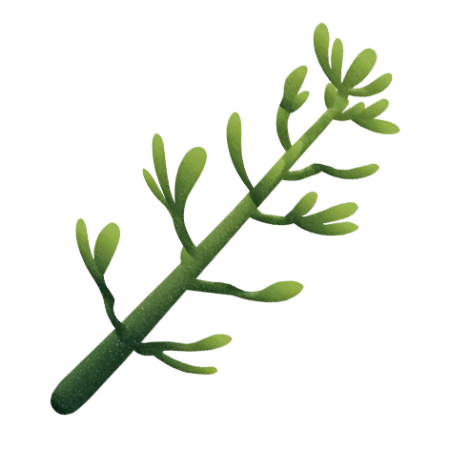
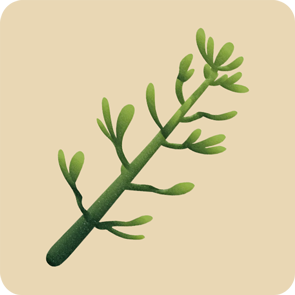
Samphire
A crisp, salty coastal plant, samphire is often enjoyed steamed, sautéed, or pickled, adding a fresh, briny flavor to seafood dishes and salads.
10
per handful
(30 grams)
CAL
C
Nutri-Score
Contains fiber, vitamins, and minerals, but also high in sodium if consumed fresh or pickled.
Value per 100 grams & per cup (80g):
25 kcal | 15 kcal
Protein
2 grams | 1.5 grams
Fats
None
Carbohydrates
4 grams | 3 grams
Fiber
3 grams | 2.5 grams
Vitamins & Nutrients
- Vitamin C: Supports immune function and skin health.
- Vitamin A: Helps maintain healthy vision.
- Potassium: Promotes fluid balance and muscle function.
- Magnesium: Supports bone and muscle health.
- Iron: Supports red blood cell formation and energy levels.
- Antioxidants (Polyphenols): Protect against inflammation and oxidative stress.
Satiety and Feelings
Samphire is low in calories and high in fiber, making it a light, crunchy snack that provides some fullness but won’t sustain long-term satiety.
What does 100 g look like?
About 1 ¼ cups loosely packed fresh samphire.
What does 2000/2500 calories look like?
10,000–12,500 g (10–12.5 kg / 22–27.5 lbs) or roughly 125–156 cups of fresh samphire – extremely low in calories!
Daily Value per 100 grams %
Did you know?
Samphire is sometimes called “sea asparagus” or “sea beans” due to its salty flavor and coastal growth.
It thrives in salt marshes and tidal flats.
Pickled samphire is a traditional delicacy in many European coastal countries.
Drawback
High in sodium, especially when pickled, which may affect blood pressure.
Low in calories and protein, so it won’t provide long-lasting fullness.
Some people may find its salty flavor overpowering if eaten in large amounts.