Shiitake

Savoy Cabbage
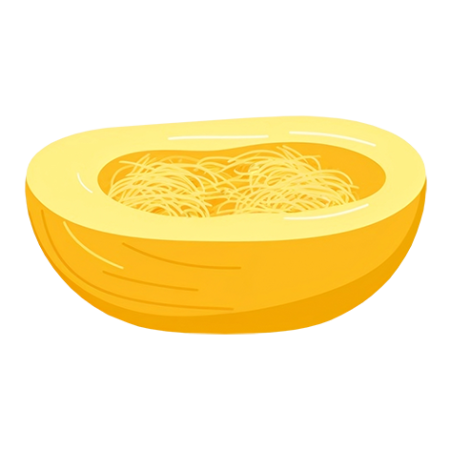
Spaghetti Squash
With its unique stringy texture resembling pasta, spaghetti squash is a popular low-carb alternative to noodles. Hydrating, fiber-rich, and a fun way to get more vegetables into your meals.
140
1 half
(450 grams)
CAL
A
Nutri-Score
High in water content, and a good source of fiber and vitamin C.
Value per 100 grams & per cup (155g):
30 kcal / 50 kcal
Protein
0.5 grams / 1 gram
Fats
0.1 grams / 0.2 grams
Carbohydrates
7 grams / 10 grams
Fiber
1.5 grams / 2.5 grams
Vitamins & Nutrients
- Vitamin C: Supports immune health and collagen production.
- Vitamin B6: Aids brain development and function.
- Potassium: Helps regulate fluid balance and blood pressure.
- Manganese: Important for metabolism and bone health.
Satiety and Feelings
The fibrous, water-rich strands of spaghetti squash offer light fullness without heaviness. It’s a good choice if you're craving volume with few calories.
What does 100 g look like?
About 1 cup of cooked strands or a tennis ball worth of cooked strands.
What does 2000/2500 calories look like?
About 10 medium squashes (10 kg)
Daily Value per 100 grams %
Did you know?
When cooked, the flesh of spaghetti squash naturally separates into long, noodle-like strands, making it a popular pasta substitute.
It’s technically a winter squash, but it’s harvested in late summer through winter.
Spaghetti squash is low in calories but rich in fiber and antioxidants.
Its neutral flavor makes it perfect for pairing with savory sauces, just like real pasta.
Originally native to Central America, it was introduced more broadly in the early 20th century and gained popularity during low-carb diet trends.
Drawback
Not as nutrient-dense as other squashes like butternut or pumpkin.
May become mushy if overcooked, losing its noodle-like texture.
Low in protein, so it’s best paired with a protein-rich sauce or dish.