Potato

Penny Bun

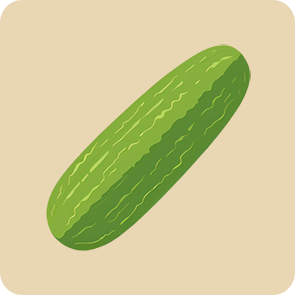
Pickle
Crunchy and tangy, pickles make a flavorful snack or side. They're extremely low in calories and can aid digestion if fermented, though high in sodium.
5
1 medium pickle
(65 grams / 10 cm / 4 inches)
CAL
C
Nutri-Score
Very low in calories, contains probiotics (if fermented).
Value per 100 grams & per cup (120g):
10 kcal / 15 kcal
Protein
0.5 grams / 0.6 grams
Fats
0.1 grams / 0.2 grams
Carbohydrates
2.5 grams / 3 grams
Fiber
1.2 grams / 1.5 grams
Vitamins & Nutrients
- Vitamin K: Supports blood clotting and bone health.
- Vitamin A: Helps maintain vision and immune health.
- Probiotics: Aid gut health if pickled via fermentation.
- Sodium: Preserves the vegetable but should be moderated.
Satiety and Feelings
Pickles are satisfying due to their strong flavor and crunch, though they’re not very filling. They're often used to satisfy cravings without many calories.
What does 100 g look like?
Roughly 3–4 medium spears or roughly ½ cup sliced.
What does 2000/2500 calories look like?
About 300 pickles (15 kg).
Daily Value per 100 grams %
Did you know?
Pickles have been enjoyed for thousands of years, dating back to ancient Mesopotamia.
They were a favorite food of Cleopatra and thought to contribute to her health.
Fermented pickles contain probiotics that support gut health.
In the U.S., pickles are most commonly made from cucumbers, but almost any vegetable can be pickled.
Sour or dill pickles are more acidic, while bread-and-butter pickles tend to be sweeter.
Drawback
Very high in sodium, which may raise blood pressure if eaten often.
Pickling vinegar can erode tooth enamel.
Not all pickles contain probiotics, especially if made with vinegar and not fermented.