Nori

Peas

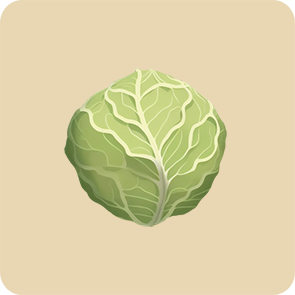
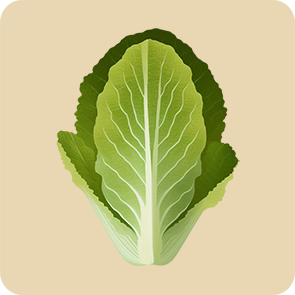
Napa Cabbage
A mildly sweet leafy vegetable commonly used in East Asian cuisine. It's versatile—great raw in salads, stir-fried, or fermented in kimchi
130
medium size
(1000 grams)
CAL
A
Nutri-Score
High in fiber, and rich in vitamins like K and C.
Value per 100 grams & per cup (70g):
15 kcal / 10 kcal
Protein
1 gram / 1 gram
Fats
0.2 grams / 0.2 grams
Carbohydrates
2.2 grams / 2.0 grams
Fiber
1.0 gram / 10 gram
Vitamins & Nutrients
- Vitamin C: Supports immune function and collagen production.
- Vitamin K: Essential for blood clotting and bone health.
- Folate: Important for red blood cell formation and DNA synthesis.
- Calcium: Supports bone strength and muscle function.
- Potassium: Helps regulate blood pressure and fluid balance.
Satiety and Feelings
Thanks to its high water and fiber content, Napa cabbage can help you feel full while adding very few calories. It’s gentle on the stomach and hydrating.
What does 100 g look like?
Roughly 1½ cups of chopped Napa cabbage or 3–4 large leaves.
What does 2000/2500 calories look like?
About 20 medium heads (8 kg).
Daily Value per 100 grams %
Did you know?
Napa cabbage (or Chinese cabbage) is believed to have originated in China over 1,000 years ago and is now one of the most popular vegetables in East Asian cuisine.
It is the main vegetable used in traditional kimchi.
Napa cabbage is extremely hydrating, made up of about 95% water.
The name “Napa” comes from the Japanese word “nappa”, meaning leafy greens.
It grows quickly and can thrive in cool climates, making it a popular fall and winter crop.
Drawback
Can cause gas or bloating in some people due to fiber and sulfur-containing compounds.
May interfere with thyroid function if eaten in extremely large raw quantities (like other cruciferous vegetables).
Some people may find its texture too watery when cooked.