Butternut

Caper
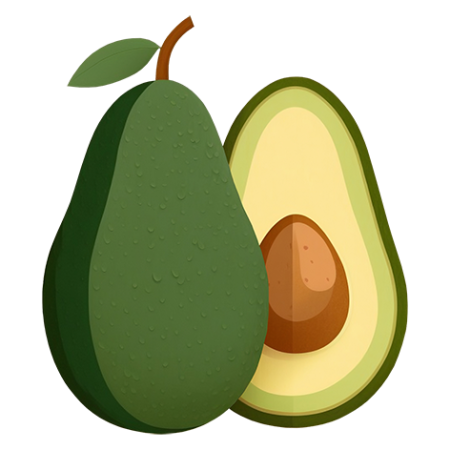
Avocado
A creamy and nutrient-dense fruit, avocados are known for their heart-healthy fats and satisfying texture. They're perfect for spreading, blending, or slicing into any meal.
240
medium size
(150 grams)
CAL
A
Nutri-Score
High in healthy fats, rich in fiber and potassium, and packed with vitamins.
Value per 100 grams & per cup (150g):
160 kcal / 240 kcal
Protein
2 grams / 3 grams
Fats
15 grams / 22.5 grams
Carbohydrates
9 grams / 13.5 grams
Fiber
7 grams / 10.5 grams
Vitamins & Nutrients
- Vitamin K: Essential for blood clotting and bone health.
- Folate (Vitamin B9): Supports cell function and tissue growth.
- Potassium: Helps lower blood pressure and supports heart function.
- Monounsaturated fats: Promote heart health and reduce inflammation.
Satiety and Feelings
Avocados are rich and creamy, keeping you fuller for longer thanks to their healthy fats and fiber content.
What does 100 g look like?
Roughly ⅔ of a medium avocado or ⅔ cup mashed.
What does 2000/2500 calories look like?
About 10 avocados (1.5 kg).
* Contains Monounsaturated Fats: Help reduce LDL (bad) cholesterol and support heart health.
Daily Value per 100 grams %
Did you know?
Avocados are often called “nature’s butter” because of their rich, creamy texture, but they contain healthy monounsaturated fats instead of saturated fats.
The word “avocado” comes from the Aztec word “ahuacatl,” which also means “testicle,” likely due to the fruit’s shape.
Avocados evolved to feed giant prehistoric sloths, as these massive creatures could easily consume the large fruits, helping to spread the seeds.
Avocados are a fruit, not a vegetable, and belong to the laurel family, closely related to cinnamon.
Drawback ⚠️
High in calories, which can add up quickly if you’re not mindful of portion sizes.
Can cause stomach upset in sensitive individuals due to high fiber and fat.
Latex allergy sufferers may react to avocados due to cross-reactivity.