Radicchio

Rhubarb
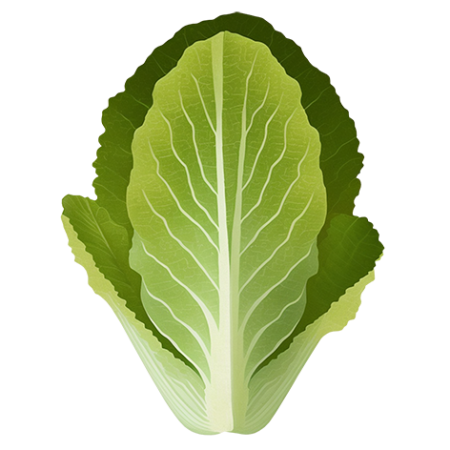
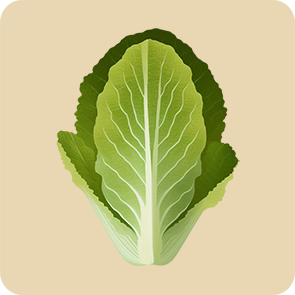
Romaine Lettuce
This crunchy, hydrating leafy green is a classic base for salads and sandwiches. It’s low in calories but packed with micronutrients that support vision, immunity, and bone health.
100
1 medium head
(600 grams)
CAL
A
Nutri-Score
High in Vitamin A and Vitamin K, and full of water and fiber.
Value per 100 grams & per cup (50g):
20 kcal / 10 kcal
Protein
1.2 grams / 0.6 grams
Fats
0.3 grams / 0.15 grams
Carbohydrates
2.9 grams / 1.5 grams
Fiber
1.2 grams / 0.6 grams
Vitamins & Nutrients
- Vitamin A: Promotes healthy vision and skin.
- Vitamin K: Essential for blood clotting and bone strength.
- Folate: Supports DNA synthesis and repair.
- Potassium: Helps maintain blood pressure and hydration.
- Beta-carotene: A powerful antioxidant and Vitamin A precursor.
Satiety and Feelings
Romaine Lettuce adds volume without calories, helping you feel full with large portions. While not highly satiating on its own, it's perfect for bulking up meals.
What does 100 g look like?
About 3 large leaves or 1 1/2 cups chopped.
What does 2000/2500 calories look like?
About 20 whole heads (15 kg).
Daily Value per 100 grams %
Did you know?
Romaine Lettuce is one of the oldest known vegetables, dating back to ancient Egypt.
It was considered sacred by Egyptians and used in religious ceremonies.
Romaine is a hydrating food, made up of over 90% water.
It’s one of the few salad greens that holds up well to grilling.
The darker outer leaves contain more nutrients than the paler inner ones.
- The name “Romaine” comes from the French word for Rome, reflecting its origin in the Mediterranean region and its historical connection to the gardens of ancient Rome.
Drawback
Low in calories and protein, so it won’t keep you full for long alone.
Spoils quickly—can wilt or go slimy if not stored properly.
May cause digestive upset in some if eaten in large amounts due to fiber.