Tomato
Watercress
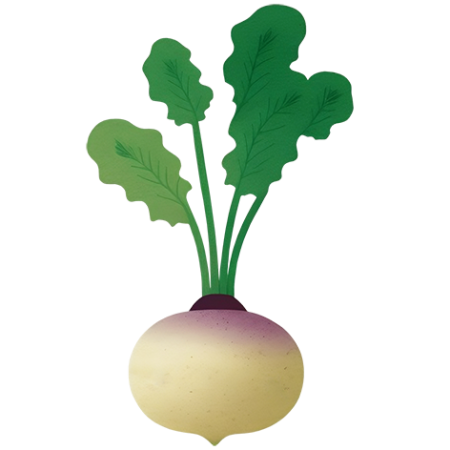
Turnip
Mildly peppery and crunchy when raw, turnips are a low-calorie root vegetable that can be roasted, mashed, or eaten raw for a crisp snack.
40
1 medium root
(150 grams)
CAL
A
Nutri-Score
Low in calories, fat-free, high in fiber, and a source of vitamin C.
Value per 100 grams & per cup (130g):
30 kcal / 35 kcal
Protein
1 gram / 1.2 grams
Fats
0.1 grams / 0.1 grams
Carbohydrates
6.5 grams / 8.5 grams
Fiber
2 grams / 2.5 grams
Vitamins & Nutrients
- Vitamin C: Supports immune health and skin repair.
- Potassium: Helps regulate fluid balance and nerve signals.
- Calcium: Important for bone strength.
- Glucosinolates: Plant compounds with potential cancer-fighting properties.
Satiety and Feelings
Turnips are low in calories and not very filling on their own, but the fiber offers a bit of bulk. They’re best combined with more satiating foods in a meal.
What does 100 g look like?
Roughly half a medium turnip or about ⅔ cup diced.
What does 2000/2500 calories look like?
Around 70 medium turnips (8kg).
Daily Value per 100 grams %
Did you know?
Turnips have been cultivated for over 4,000 years, making them one of the oldest root vegetables in human diets.
In medieval Europe, turnips were so common that they were considered food for the poor—until potatoes took their place.
Turnips belong to the Brassica family, just like broccoli, kale, and cabbage.
Both the root and the leafy greens (turnip tops) are edible and nutritious.
Turnip lanterns were carved in ancient Celtic traditions for Samhain (a precursor to Halloween) to ward off evil spirits—long before pumpkins were used.
Drawback
Can cause bloating or gas in some people due to fiber and glucosinolates.
The flavor may become bitter when overcooked.
May interfere with thyroid function if consumed excessively raw (due to goitrogens).