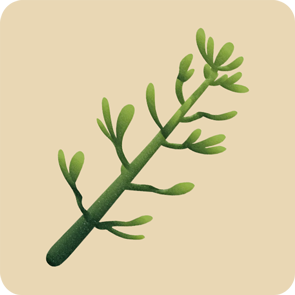
Watercress

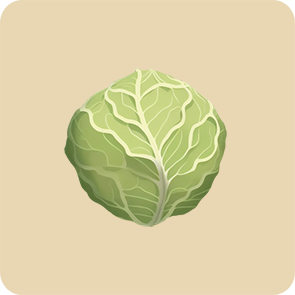
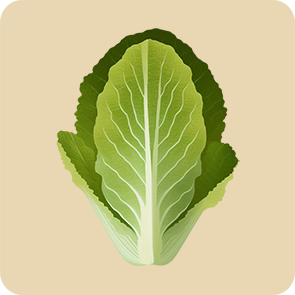
Green Cabbage

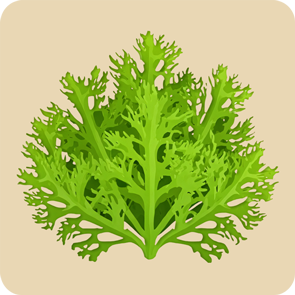
Wakame
A type of edible seaweed commonly used in miso soup and salads, wakame is light, subtly sweet, and incredibly nutrient-dense while being very low in calories
35
1 cup
(80 grams)
CAL
A
Nutri-Score
Low in calories and fat, high in iodine, calcium, and beneficial plant compounds.
Value per 100 grams & per cup (80g):
45 kcal / 35 kcal
Protein
3 grams / 2.5 grams
Fats
0.6 grams / 0.5 grams
Carbohydrates
10 grams / 7 grams
Fiber
0.5 grams / 0.4 grams
Vitamins & Nutrients
- Iodine: Crucial for thyroid function and hormone regulation.
- Calcium: Supports bone health.
- Magnesium: Aids in muscle and nerve function.
- Fucoxanthin (antioxidant): May support metabolism and fat burning.
Satiety and Feelings
Though low in fiber, wakame can add bulk to meals and contribute to a feeling of fullness when eaten with soups or salads. Its umami flavor enhances appetite satisfaction.
What does 100 g look like?
Roughly 1.25 cups of rehydrated wakame (or about 10–12 grams dry before soaking).
What does 2000/2500 calories look like?
About 4.4 kilograms of rehydrated wakame — not recommended due to excessive iodine intake.
Daily Value per 100 grams %
Did you know?
Wakame has been cultivated in Japan for over 1,000 years and is considered one of the oldest edible seaweeds.
It’s a member of the brown algae family, which includes kombu and kelp.
Fucoxanthin, a pigment in wakame, is being researched for its potential anti-obesity effects.
Wakame expands significantly when soaked—10 grams dry can yield up to 100 grams once rehydrated.
It’s naturally rich in iodine, but too much can disrupt thyroid health, especially if consumed daily in large amounts.
Drawback
Very high in iodine, which can be harmful if consumed excessively.
May interact with thyroid medications or conditions.
Can contain heavy metals depending on the harvest location, though usually within safe limits.