Chicory

Corn

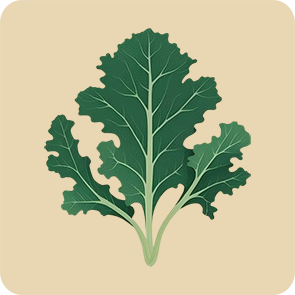
Collard Greens
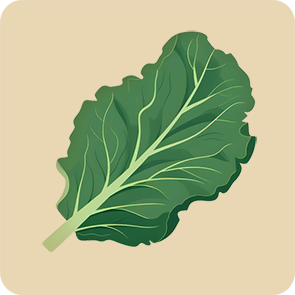
A nutrient-dense leafy greens rich in vitamins A, C, and K, and packed with fiber. Often used in Southern dishes, they provide essential nutrients for overall health.
5
medium leaf
(20 grams)
CAL
A
Nutri-Score
Low in calories, rich in vitamins and minerals, and packed with fiber.
Value per 100 grams & per cup (190g):
30 kcal / 60 kcal
Protein
3 grams / 5.5 grams
Fats
0.5 grams / 1 gram
Carbohydrates
6.5 grams / 12.5 grams
Fiber
5 grams / 7.5 grams
Vitamins & Nutrients
- Vitamin A: Supports healthy vision and immune health.
- Vitamin C: A powerful antioxidant that aids in immune function.
- Vitamin K: Important for bone health and blood clotting.
- Calcium: Essential for bone strength and muscle function.
Satiety and Feelings
Collard greens are low in calories but high in fiber, which helps you feel full longer, making them a great addition to meals when trying to manage hunger.
What does 100 g look like?
About 4 medium leaves or 1-2 cups chopped.
What does 2000/2500 calories look like?
About 225 leaves or 70 cups of collard greens (7 kg).
Daily Value per 100 grams %
Did you know?
Collard greens are part of the cabbage family and are often used in traditional Southern dishes, especially in the U.S.
The name “collard” comes from the word “colewort,” which means “a type of cabbage.”
Collard greens were originally cultivated in ancient Greece and were considered a staple food during the Great Depression due to their affordability and nutrition.
Collard greens are often cooked with smoked meats like ham hocks to add flavor and richness.
Drawback
While nutritious, collard greens contain oxalates, which can interfere with calcium absorption if consumed in excessive amounts.
High in fiber, collard greens may cause digestive discomfort like bloating or gas in some individuals.
If cooked with too much fat or salt, collard greens can lose their nutritional benefits.