Pumpkin

Beet
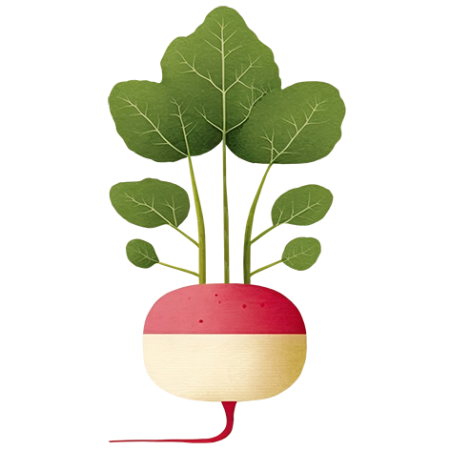
Radish
Crunchy, spicy, and packed with water. They make a great addition to salads, or as a snack, and can help boost your immune system with their vitamin C content.
2
1 medium root
(10 grams)
CAL
A
Nutri-Score
Great source of Vitamin C and antioxidants.
Value per 100 grams & per cup (120g):
15 kcal / 20 kcal
Protein
0.7 grams / 1 gram
Fats
0.1 grams / 0.1 grams
Carbohydrates
3.5 grams / 4 grams
Fiber
1.5 grams / 2 grams
Vitamins & Nutrients
- Vitamin C: Supports immune function and skin health.
- Vitamin B6: Plays a role in energy metabolism.
- Potassium: Helps maintain fluid balance and supports muscle function.
- Folate: Supports red blood cell production and overall cell health.
Satiety and Feelings
Radishes are hydrating and provide a nice crunch that can help curb cravings. The fiber and water content aid digestion, giving you a feeling of fullness without many calories.
What does 100 g look like?
Approximately 1 medium-sized radish or 6-7 radish slices.
What does 2000/2500 calories look like?
About 1300 radishes (14 kg).
Daily Value per 100 grams %
Did you know?
Radishes have been cultivated for thousands of years, with evidence showing they were grown in ancient Egypt.
They’re rich in water—about 95%—making them a hydrating vegetable to include in your diet.
Radishes can help promote healthy digestion and are often used as a natural remedy to relieve bloating and gas.
The radish family (Cruciferae) includes other vegetables like cabbage, broccoli, and cauliflower, all known for their health benefits.
Drawback
Spicy taste can be too strong for some people.
May cause gas or bloating in sensitive individuals due to high fiber content.
Overconsumption of radishes may irritate the stomach, especially in people with digestive issues.