Beet

Potato

Red Cabbage
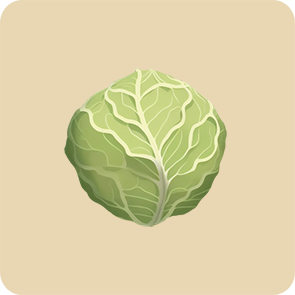
Red cabbage is a crunchy and slightly sweet vegetable, often used in salads, slaws, or as a colorful addition to cooked dishes.
310
medium head
(1000 grams)
CAL
A
Nutri-Score
Low in fat, high in fiber, and rich in antioxidants.
Value per 100 grams & per cup (100g):
30 kcal
Protein
1.5 grams
Fats
0.1 grams
Carbohydrates
7.5 grams
Fiber
2 grams
Vitamins & Nutrients
- Vitamin C: Boosts immunity and skin health.
- Vitamin K: Essential for blood clotting and bone health.
- Potassium: Supports muscle function and hydration.
- Antioxidants (Anthocyanins): Help protect cells from oxidative damage.
Satiety and Feelings
The high fiber content of red cabbage helps you feel full longer while offering a crunchy, satisfying texture. It also provides a refreshing burst of flavor in dishes.
What does 100 g look like?
About 1/4 of a medium-sized head or 1/2 cup of shredded red cabbage.
What does 2000/2500 calories look like?
About 7 heads of red cabbage (7 kg).
Daily Value per 100 grams %
Anthocyanins
50%
Vitamin C
40%
Vitamin K
35%
Vitamin B9 (Folate)
15%
Fiber
10%
Protein
5%
Sodium (Salt)
2%
Carbohydrates
5%
Total Fat
1%
Saturated Fat
Saturated Fat
1%
Cholesterol (free)
0%
Sugar (natural)
5%
Calories
1%
Did you know?
- Red cabbage gets its vibrant color from anthocyanins, powerful antioxidants that are also found in blueberries and blackberries.
- Red cabbage is rich in fiber, which aids in digestion and supports heart health.
- Historically, red cabbage was used as a natural dye in textiles.
- It’s known to be a low-calorie, nutrient-dense food that can help with weight management.
Drawback
- Red cabbage is high in fiber, which may cause bloating or gas if consumed in large amounts.
- May interfere with blood clotting due to its high vitamin K content, especially for those on blood-thinning medication.
- The strong taste may not be to everyone’s liking in raw dishes.