Spinach
Snap Pea
Swiss Chard
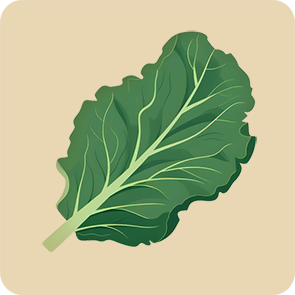
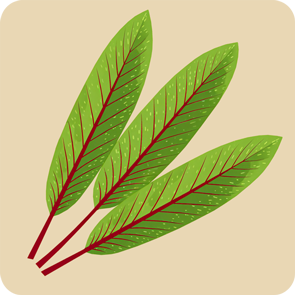
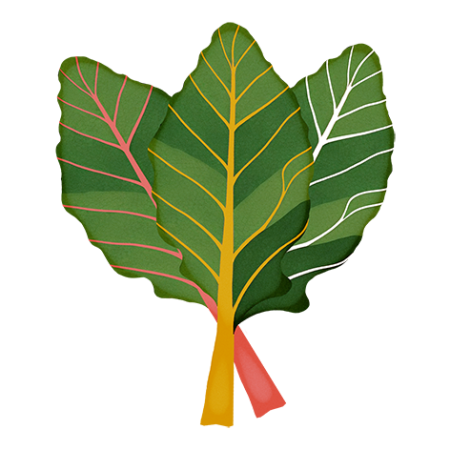
Mild and earthy in flavor, Swiss chard is a leafy green powerhouse packed with nutrients. It’s especially prized in Mediterranean cuisine and adds a vibrant boost to any plate.
5
1 medium leaf
(15 grams)
CAL
A
Nutri-Score
Rich in vitamins A, K, and C, plus magnesium and antioxidants.
Value per 100 grams & per cup (35g):
20 kcal / 5 kcal
Protein
1.8 grams / 0.6 grams
Fats
0.2 grams / 0.05 grams
Carbohydrates
3.7 grams / 1.5 grams
Fiber
1.5 grams / 0.6 grams
Vitamins & Nutrients
- Vitamin K: Vital for blood clotting and bone health.
- Vitamin A: Supports eye health and immune function.
- Vitamin C: Boosts immunity and helps with iron absorption.
- Magnesium: Helps regulate blood pressure and muscle function.
- Antioxidants (Beta-carotene, Lutein): Protect cells from damage.
Satiety and Feelings
Swiss chard is light and not very filling on its own, but it's a great low-calorie base or side when paired with more substantial foods.
What does 100 g look like?
Roughly 2 packed cups raw or ½ cup cooked leaves.
What does 2000/2500 calories look like?
Over 10 kilograms (22 lbs) of cooked chard.
Daily Value per 100 grams %
Did you know?
Swiss chard isn’t actually Swiss—it was named by a Swiss botanist but is Mediterranean in origin.
It belongs to the beet family, and its colorful stems can be white, red, or yellow.
Chard has been grown since ancient Greek and Roman times for both culinary and medicinal use.
Rich in nitrates, chard may help lower blood pressure naturally.
Drawback
Contains oxalates, which may interfere with calcium absorption or affect those prone to kidney stones.
May cause bloating or digestive discomfort in large amounts when eaten raw.
Its strong earthy flavor isn’t for everyone.