Fruit Leather

Pancake

Palm Sugar
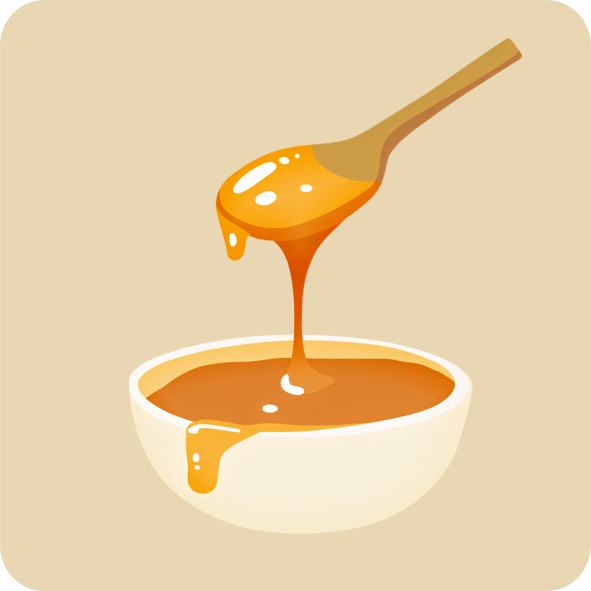
A natural sweetener made from the sap of palm trees, palm sugar has a rich, caramel-like flavor and is commonly used in Southeast Asian cooking and desserts. It’s less processed than white sugar.
45
1 tbsp
(12 grams)
CAL
E
Nutri-Score
Contains natural sugars but also minerals like potassium and iron.
Value per 100 grams & per cup (200g):
385 kcal | 765 kcal
Protein
None
Fats
None
Carbohydrates
95 grams | 195 grams
Fiber
None
Vitamins & Nutrients
- Potassium: Helps maintain fluid balance and muscle function.
- Iron: Supports healthy blood cells.
- Vitamin B1 (Thiamine): Aids in energy metabolism.
- Magnesium: Important for muscle and nerve function.
Satiety and Feelings
Palm sugar provides quick energy due to its high carbohydrate content but lacks fiber or protein for long-lasting fullness.
What does 100 g look like?
About ½ cup of palm sugar (granulated or solid chunks).
What does 2000 | 2500 calories look like?
About 5 ¼ cups (525 grams / 1.16 lbs).
Daily Value per 100 grams %
Did you know?
Palm sugar is made by boiling down the sap collected from various types of palm trees, including coconut and date palms.
It has a rich caramel flavor that’s often preferred in traditional Asian sweets.
Used for centuries as a natural sweetener, palm sugar contains minerals like potassium and iron, unlike refined white sugar.
Palm sugar is typically sold in solid blocks or granulated form and can be grated or dissolved easily.
In cooking, it’s common to use a fork or spoon to break off pieces from solid blocks for measuring.
Drawbacks ⚠️
High in natural sugars, which can impact blood sugar levels if consumed in excess.
Contains no fiber or protein, so it provides quick but short-lived energy.
Less refined doesn’t always mean healthier; calorie content is similar to regular sugar.