Marble Cake

Lollipop
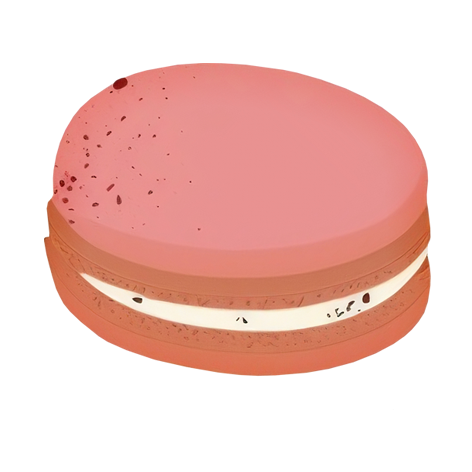
Macaron
A light, crisp-shelled dessert with a chewy interior, the macaron is a French delicacy made with egg whites, sugar, and almond flour, sandwiched with buttercream, ganache, or jam.
95
1 piece
(20 grams)
CAL
E
Nutri-Score
Contains almond flour (a source of healthy fats and vitamin E), but also high in sugar and low in fiber and protein.
Value per 100 grams & per cup (120g):
470 kcal | 565 kcal
Protein
8 grams | 10 grams
Fats
25 grams | 30 grams
Carbohydrates
57 grams | 68.5 grams
Fiber
2 grams |2.5 grams
Vitamins & Nutrients
- Vitamin E: Supports skin health and acts as an antioxidant.
- Iron: Aids in oxygen transport.
- Magnesium: Supports nerve and muscle function.
Satiety and Feelings
Macarons are airy and delicate, offering a quick sweet fix. Due to their small size and low protein and fiber, they don't promote long-lasting fullness.
What does 100 g look like?
About 6–7 macarons, or 1 heaping cup.
What does 2000 | 2500 calories look like?
About 28–35 macarons, or 4 ½ to 5 ½ cups (430–540 grams / 0.95–1.2 lbs).
Daily Value per 100 grams %
Did you know?
The French macaron is not to be confused with the macaroon—they are entirely different desserts!
Catherine de’ Medici is often credited with introducing the macaron to France in the 1500s.
Modern macarons became popular in Paris in the early 1900s, especially thanks to pastry houses like Ladurée.
They are made using the “macaronage” technique, which involves carefully folding meringue and almond flour to get the perfect texture.
Drawbacks ⚠️
High in sugar, which can contribute to blood sugar spikes and energy crashes.
Offers little protein or fiber, making them less satisfying than they appear.
Can contain artificial colors and flavors, especially in mass-produced varieties.