Gumdrop

Gummy

Honey
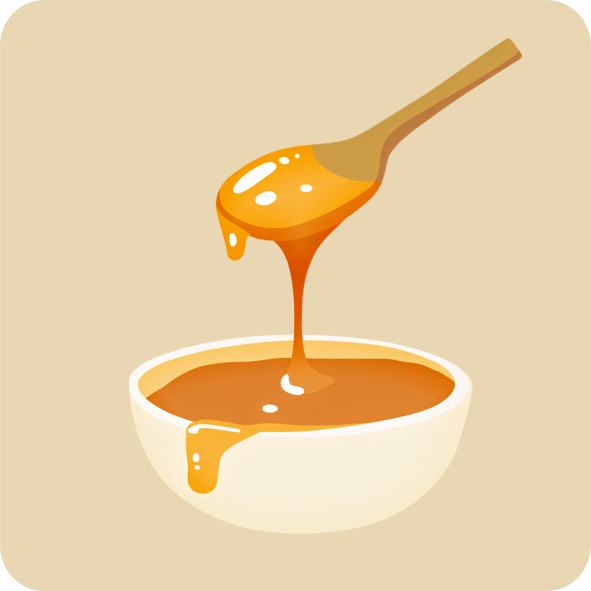
A sweet, viscous liquid made by bees from flower nectar, honey is prized for its natural sweetness, distinctive floral flavors, and uses in cooking, baking, and natural remedies.
65
1 tbsp
(20 grams)
CAL
E
Nutri-Score
Contains small amounts of vitamins and minerals, mainly antioxidants and trace minerals, but is also high in natural sugars.
Value per 100 grams & 1 cup (340g):
305 kcal | 1035 kcal
Protein
0.3 grams | 1 grams
Fats
None
Carbohydrates
82 grams | 280 grams
Fiber
None
Vitamins & Nutrients
- Vitamin C: Supports immune function and skin health.
- Calcium: Important for bone strength.
- Iron: Essential for red blood cell production.
- Antioxidants: Help reduce inflammation and oxidative stress.
Satiety and Feelings
Honey provides quick energy with its high natural sugar content but lacks fiber and protein, so it won’t keep you full for long.
What does 100 g look like?
About 5 tablespoons of honey (approximate volume).
What does 2000 | 2500 calories look like?
About 6.5 | 8 tablespoons (130 | 168 grams / 0.29 | 0.37 pounds).
Daily Value per 100 grams %
Did you know?
Honey has been used for thousands of years not just as a sweetener but also for its antibacterial and healing properties.
It never spoils and was found in ancient Egyptian tombs still edible after thousands of years.
The flavor and color of honey depend heavily on the type of flowers bees collect nectar from.
Raw honey contains bee pollen and enzymes that may offer additional health benefits.
Drawbacks ⚠️
High in natural sugars, which can spike blood sugar levels if consumed in excess.
Not suitable for infants under 1 year due to risk of botulism.
Some commercial honeys may be adulterated or heavily processed.