Chocolate Cake

Caramel

Carrot Cake
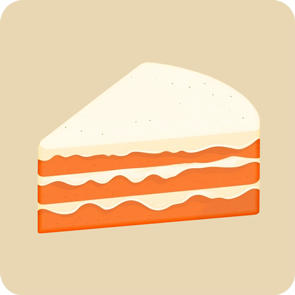
Moist and spiced, carrot cake combines grated carrots, warm spices, and often a creamy cream cheese frosting for a rich, sweet treat.
350
1 slice
(100 grams)
CAL
D
Nutri-Score
Contains vitamin A, fiber, and walnuts (healthy fats)—but also high in sugar, refined flour, and saturated fat from frosting.
Value per 100 grams & per cup (130g):
350 kcal | 455 kcal
Protein
4 grams | 5 grams
Fats
18 grams | 23.5 grams
Carbohydrates
45 grams | 58.5 grams
Fiber
2 grams | 2.5 grams
Vitamins & Nutrients
- Vitamin A: Comes from beta-carotene in carrots, supports eye and immune health.
- Vitamin K: Aids in blood clotting and bone health.
- Iron: Supports red blood cell production.
- Magnesium: Helps regulate nerve and muscle function.
- Omega-3s (if made with walnuts): Support heart and brain health.
Satiety and Feelings
Thanks to fat and fiber, carrot cake can feel decadent and filling, but the sugar content may lead to a quick energy spike followed by a crash. Frosting adds extra richness and calories.
What does 100 g look like?
Roughly ¾ of a slice or ½ cup of carrot cake.
What does 2000 | 2500 calories look like?
Around 6 ½ slices or 3 ⅔ cups (885 grams / 1.95 lbs)
Daily Value per 100 grams %
Did you know?
Carrots were used in medieval sweet dishes when sugar was expensive—making carrot cake a descendant of old-world recipes.
Carrot cake surged in popularity in the 1970s as a “healthy” dessert.
The addition of pineapple, raisins, or walnuts is traditional in some regions, enhancing flavor and texture.
Cream cheese frosting, invented in the U.S., became its iconic topping.
Drawbacks ⚠️
High in sugar, which can spike blood glucose and contribute to weight gain.
Cream cheese frosting adds extra saturated fat and calories.
Often low in protein, meaning it may not keep you full for long.
Store-bought versions may contain preservatives and artificial flavors.