Liquid Caramel
Key Lime Pie

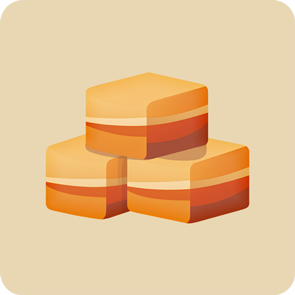
Halva
A dense, sweet confection made primarily from sesame paste (tahini) and sugar, halva is popular across the Middle East, Mediterranean, and parts of Asia. It has a crumbly texture and rich, nutty flavor.
250
1 piece
(30 grams – 5 x 5 x 2 cm / 2 x 2 x 1″)
CAL
D
Nutri-Score
Contains protein, iron, and B vitamins, but also saturated fats, refined carbs, and can be high in sodium.
Value per 100 grams & per cup (120g):
500 kcal | 600 kcal
Protein
12 grams | 15 grams
Fats
25 grams | 30 grams
Carbohydrates
50 grams | 60 grams
Fiber
5 grams | 6 grams
Vitamins & Nutrients
- Vitamin B1 (Thiamine): Supports energy metabolism.
- Calcium: Helps maintain strong bones and teeth.
- Iron: Important for oxygen transport in blood.
- Magnesium: Supports muscle and nerve function.
Satiety and Feelings
Halva is energy-dense and rich in fats and sugars, providing quick energy and a satisfying sweetness, but due to its sugar content, it may not keep you full for long.
What does 100 g look like?
About 3-4 pieces of halva (depending on size).
What does 2000 | 2500 calories look like?
13-16 pieces or about 1 ¾ cups (240 grams / 0.53 lbs).
Daily Value per 100 grams %
Did you know?
Halva has been enjoyed for thousands of years and has many regional variations, from sesame-based to flour-based versions.
It is traditionally made from tahini (sesame paste), which gives it its distinctive nutty flavor.
Often eaten as a dessert or snack, it pairs well with tea or coffee.
In some cultures, halva is used during festivals and religious ceremonies.
Drawbacks ⚠️
High in sugars and saturated fats, which may impact heart health if overconsumed.
Due to its dense calorie content, it can contribute to weight gain if eaten in large quantities.
Some commercial versions contain preservatives and added oils that affect nutritional quality.