Custard

Crème Brûlée
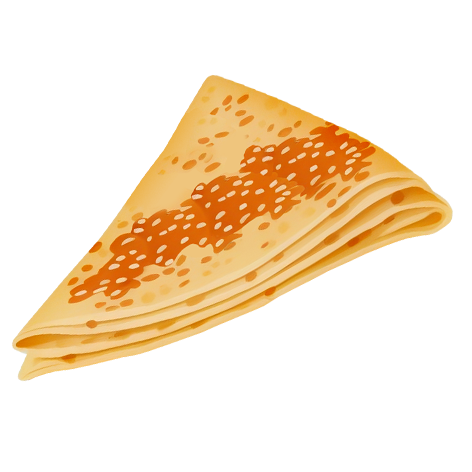
Crêpe
A thin French pancake, crêpes are enjoyed sweet or savory. They're made from flour, eggs, and milk, and are light, foldable, and perfect for fillings like fruit, cheese, or chocolate.
110
1 medium crêpe
(50 grams – 20 cm / 8 inches)
CAL
C
Nutri-Score
Some protein and iron, but they’re often low in fiber.
Value per 100 grams & per cup (80g):
220 kcal | 175 kcal
Protein
7 grams | 5.5 grams
Fats
7 grams | 5.5 grams
Carbohydrates
30 grams | 25 grams
Fiber
1 gram | 0.8 grams
Vitamins & Nutrients
- Iron: Supports oxygen transport in the blood.
- Calcium: Strengthens bones and teeth.
- Vitamin B2 (Riboflavin): Important for energy production and skin health.
- Phosphorus: Essential for strong bones and energy metabolism.
Satiety and Feelings
Crêpes are light and versatile, and their protein content helps slightly with satiety. However, low fiber means they’re not very filling on their own—satiety often depends on the filling.
What does 100 g look like?
About 2 plain medium crêpes or 1¼ cups batter.
What does 2000 | 2500 calories look like?
About 18–22 crêpes or 9–11 cups batter (910–1135 grams / 2–2.5 lbs)
Daily Value per 100 grams %
Did you know?
Crêpes originated in Brittany, France, and are a staple of French cuisine.
“La Chandeleur”, celebrated on February 2nd, is also known as Crêpe Day in France.
Crêpes can be made gluten-free with buckwheat flour (called galettes).
The word crêpe comes from the Latin crispa, meaning “curled” or “wrinkled.”
Drawbacks ⚠️
Low in fiber, especially when made with refined flour.
Can become high in sugar and fat depending on fillings like Nutella or whipped cream.
Often low in micronutrients unless enriched or filled with healthy ingredients.
Easy to overeat due to thinness and mild taste.