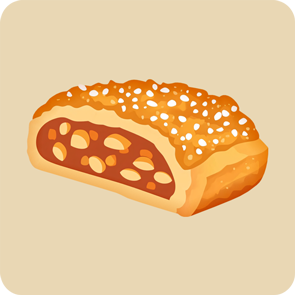
Fig Roll
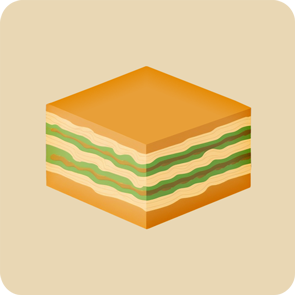
Dutch Waffle
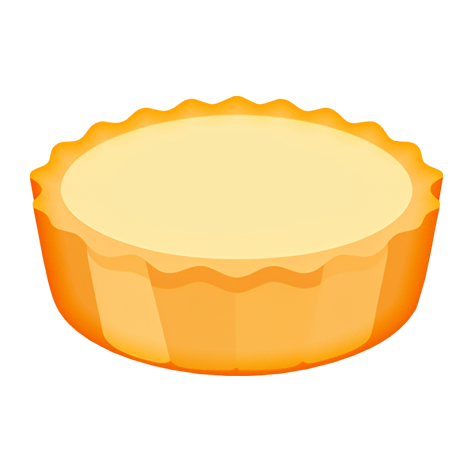
Egg Tart
A classic pastry featuring a flaky crust filled with a smooth, sweet egg custard. Egg tarts are popular in Chinese bakeries and Portuguese cuisine alike.
245
1 medium tart
(65 grams)
CAL
D
Nutri-Score
Contains protein and calcium from eggs and dairy but also high in saturated fats and sugars.
Value per 100 grams & per cup (130g):
375 kcal | 490 kcal
Protein
6 grams | 8 grams
Fats
22 grams | 29 grams
Carbohydrates
37 grams | 48 grams
Fiber
1 grams | 1.5 grams
Vitamins & Nutrients
- Vitamin B1 (Thiamine): Supports energy metabolism.
- Vitamin A: Supports vision and immune function.
- Calcium: Important for bone health.
- Iron: Helps carry oxygen in blood.
- Potassium: Maintains fluid balance.
Satiety and Feelings
Egg tarts provide moderate protein and fats, which contribute to a feeling of fullness, but the sugar content may cause quick energy spikes.
What does 100 g look like?
About 1 medium egg tart.
What does 2000 | 2500 calories look like?
About 8–10 egg tarts (720–900 grams / 1.6–2.0 lbs).
Daily Value per 100 grams %
Did you know?
The Portuguese pastel de nata is a famous variant of the egg tart, known for its caramelized top.
Egg tarts were introduced to China by Portuguese traders in the 16th century.
Traditionally eaten with forks or fingers, depending on local custom.
Egg tarts have become a staple in dim sum and bakery menus worldwide.
Drawbacks ⚠️
Contains high saturated fat and sugar, which should be consumed in moderation.
Made with refined flour and sugar, so lacks significant fiber.
Can be high in calories, especially when eaten in large quantities.