Chocolate Coated Candy

Chocolate Truffle

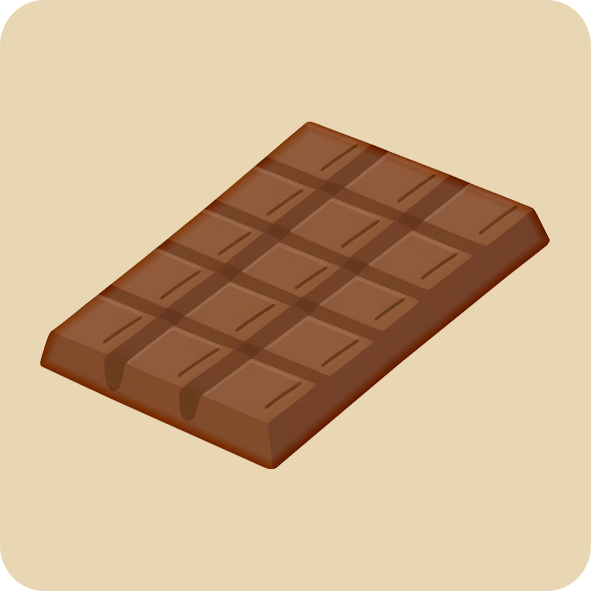
Candy Bar
A typical candy bar features a combination of chocolate, nougat, caramel, and nuts, making it rich, chewy, and satisfying for a quick treat or energy hit.
220
1 medium bar
(50 grams)
CAL
E
Nutri-Score
Mix of sugars, fats, and refined carbohydrates.
Value per 100 grams & per cup (130g):
430 kcal | 560 kcal
Protein
4 grams | 5 grams
Fats
18 grams | 23.5 grams
Carbohydrates
65 grams | 83 grams
Fiber
2 grams | 2.5 grams
Vitamins & Nutrients
- Iron: Helps carry oxygen in the blood.
- Magnesium: Supports nerve and muscle function.
- Zinc: Important for immunity and cell repair.
- Vitamin B1 (Thiamin): Helps convert food into energy.
Satiety and Feelings
Candy bars are sweet, fatty, and filling in the short term, but the sugar crash may follow quickly. The lack of fiber means they don’t keep you full for long.
What does 100 g look like?
About 2 medium candy bars or ¾ cup chopped bar.
What does 2000 | 2500 calories look like?
About 8 to 10 candy bars or 4 to 5 cups chopped (417–520 grams / 0.92–1.15 lbs)
Daily Value per 100 grams %
Did you know?
The first modern candy bar was created in the early 1900s and became popular during World War I.
Most candy bars are a mix of nougat, caramel, and chocolate, though regional varieties vary widely.
Some bars include nuts, which add protein and nutrients.
The U.S. military issued candy bars in soldiers’ rations during WWII for quick energy.
Drawbacks ⚠️
High in added sugars, which can contribute to weight gain and blood sugar spikes.
Contains saturated fats and often hydrogenated oils, impacting heart health.
Typically low in fiber, so not filling.
Can lead to cravings due to sugar-fat combination.