Bubble Tea

Berliner

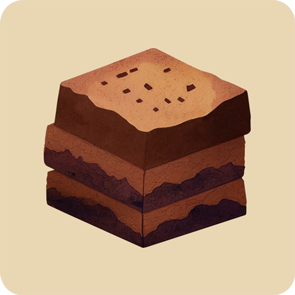
Brownie
A dense, chocolatey dessert square, brownies are loved for their rich flavor and fudgy or cakey texture. They’re a staple in many dessert menus and often served warm with ice cream.
120
1 medium square
(30 grams – 5×5 cm / 2×2 inches)
CAL
E
Nutri-Score
Contains sugar, refined flour, and saturated fats. Offers a small amount of iron and magnesium, but is low in fiber.
Value per 100 grams & per cup (135g):
400 kcal | 540 kcal
Protein
5 grams | 7 grams
Fats
20 grams | 27 grams
Carbohydrates
55 grams | 75 grams
Fiber
2 grams | 3 grams
Vitamins & Nutrients
- Iron: Helps transport oxygen through your blood.
- Magnesium: Supports muscle and nerve function.
- Zinc: Supports immune health and wound healing.
- Phosphorus: Aids in bone health and energy production.
Satiety and Feelings
Brownies are indulgent and satisfying thanks to their sugar and fat content, but they offer little lasting fullness due to low protein and fiber. Best enjoyed as an occasional treat.
What does 100 g look like?
About 3 medium brownies or ¾ cup crumbled.
What does 2000 | 2500 calories look like?
Roughly 16–21 brownies, or 5¾ to 7¼ cups crumbled (675 to 845 grams / 1.49 to 1.86 lbs)
Daily Value per 100 grams %
Did you know?
Brownies were likely first created in the United States in the early 1900s.
The first published recipe appeared in the 1906 edition of the Boston Cooking School Cookbook.
Brownies are often made with cocoa powder or melted chocolate, which gives them their signature richness.
You can find variations like blondies (made without cocoa) or versions with nuts, caramel, or cream cheese swirls.
Drawbacks ⚠️
High in added sugars, which can contribute to weight gain and blood sugar spikes.
Contains refined flour, which lacks fiber and nutrients.
Saturated fats from butter or oil may impact heart health if eaten in excess.
Not very filling, which can lead to overeating.