Crêpe

Doughnut
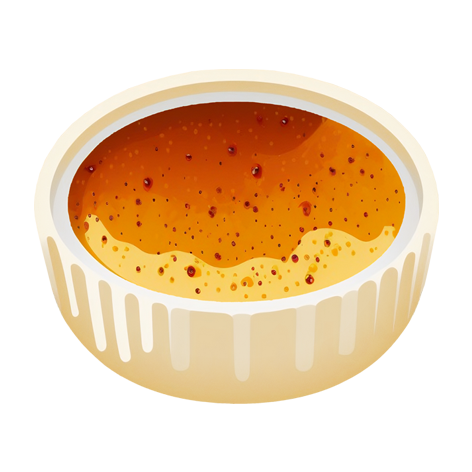
Crème Brûlée
A classic French dessert made from rich custard topped with a layer of hardened caramelized sugar. Crème brûlée is creamy and indulgent with a contrast of crunchy caramel on top.
265
1 ramekin
(150 grams)
CAL
D
Nutri-Score
Contains dairy protein and calcium but also sugars and saturated fats.
Value per 100 grams & per cup (130g):
220 kcal | 285 kcal
Protein
4 grams | 5 grams
Fats
16 grams | 20 grams
Carbohydrates
18 grams | 23.5 grams
Fiber
None
Vitamins & Nutrients
- Calcium: Supports bone health.
- Vitamin A: Helps maintain healthy vision.
- Vitamin B1 (Thiamine): Aids energy metabolism.
- Riboflavin (B2): Supports energy production.
Satiety and Feelings
Crème brûlée is rich in fat and protein, providing moderate fullness, but its sugar content can cause quick energy spikes.
What does 100 g look like?
About half a small ramekin or dessert dish.
What does 2000 | 2500 calories look like?
7 to 8 cups or ramekins (1.2 to 1.5 kg / 2.6 to 3.3 lbs).
Daily Value per 100 grams %
Did you know?
The name crème brûlée means “burnt cream” in French.
It is traditionally made by baking custard and then caramelizing sugar on top with a torch.
Crème brûlée is often flavored with vanilla, but variations include citrus or coffee.
It’s typically eaten with a spoon, carefully cracking the caramel crust.
- A similar dessert called Crème Catalan comes from Catalonia, Spain, and is traditionally flavored with cinnamon and lemon zest, and thickened with cornstarch instead of eggs.
Drawbacks ⚠️
Contains high saturated fat content that can affect heart health if overconsumed.
High in added sugars, which can spike blood sugar levels.
Lacks fiber and complex nutrients.