Tiramisu

Strawberry Shortcake
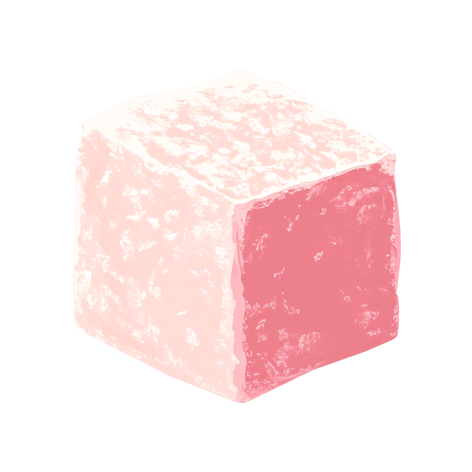
Turkish Delight
A chewy, gel-like Middle Eastern confection, traditionally flavored with rosewater, lemon, or orange and often dusted with powdered sugar. Some varieties include nuts like pistachios or hazelnuts.
30
1 cube
(10 grams)
CAL
E
Nutri-Score
Low in fat and contains small amounts of iron, but it’s also high in sugar and offers little protein or fiber.
Value per 100 grams & per cup (150g):
320 kcal | 480 kcal
Protein
1 gram | 1.5 grams
Fats
0.1 grams | 0.15 grams
Carbohydrates
80 grams | 120 grams
Fiber
0.5 grams | 0.75 grams
Vitamins & Nutrients
- Iron: Supports oxygen transport in the blood.
- Vitamin C (if citrus-based): Supports immune function.
Satiety and Feelings
Due to its high sugar and low fiber, Turkish Delight gives a quick energy spike but offers minimal long-lasting fullness. It's more of a pleasure bite than a satisfying snack.
What does 100 g look like?
Roughly 6–8 cubes of Turkish Delight (about ⅔ cup if chopped or loosely packed)
What does 2000 | 2500 calories look like?
About 5 ⅓ cups chopped or 32 cubes (530–670 grams / 1.17–1.48 lbs).
Daily Value per 100 grams %
Did you know?
Turkish Delight (called lokum) dates back to the 15th century Ottoman Empire.
It’s traditionally served with coffee or offered to guests as a gesture of hospitality.
The classic flavor is rosewater, but modern varieties include chocolate, mint, and fruit.
It gained global fame after being featured in “The Lion, the Witch and the Wardrobe”.
Drawbacks ⚠️
Extremely high in sugar, which can spike blood glucose.
Low in protein and fiber, so not a filling option.
Some commercial versions use artificial colors or flavors.
May stick to teeth and contribute to dental issues.