Salsa

Pepper Jack

Barley
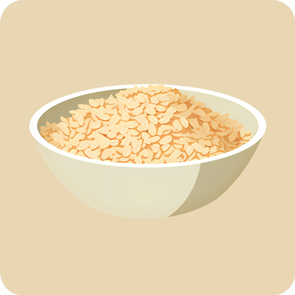
Barley is a versatile cereal grain used in soups, stews, salads, and side dishes. Its chewy texture and nutty flavor make it a hearty addition to meals, and it can be pearled or hulled depending on preparation.
195
1 cup, cooked
(155 grams)
CAL
B
Nutri-Score
Rich in fiber, protein, and minerals.
Value per 100 grams & per cup (155gr):
125 kcal | 195 kcal
Protein
2.5 grams | 3.5 grams
Fats
0.4 grams | 0.6 grams
Carbohydrates
28 grams | 44 grams
Fiber
3.8 grams | 6 grams
Vitamins & Nutrients
- Vitamin B1 (Thiamine): Supports energy metabolism and nerve function.
- Vitamin B3 (Niacin): Important for metabolism and skin health.
- Vitamin B6: Supports brain function and red blood cell production.
- Iron: Essential for oxygen transport and energy production.
- Magnesium: Supports muscle and nerve function.
Satiety and Feelings
Barley is moderate in fiber, which promotes fullness and steady energy levels. Its chewy texture makes it satisfying to eat, helping prevent overeating.
What does 100 g look like?
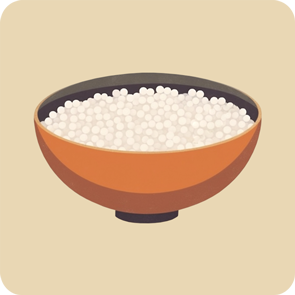
About ⅔ cup cooked barley.
What does 2000 | 2500 calories look like?
About 16 cups cooked (2.5 kg / 5.5 lbs.) for 2000 kcal, or 20 cups cooked (3.1 kg / 6.8 lbs.) for 2500 kcal.
Daily Value per 100 grams %
Did you know?
Barley is one of the oldest cultivated grains, dating back thousands of years.
It is rich in beta-glucans, a type of fiber that can help lower cholesterol.
Barley can be pearled (outer husk removed) or hulled (more fiber retained).
It’s a common ingredient in beer and malt products.
Drawbacks ⚠️
High in carbohydrates, which may impact blood sugar if eaten in very large amounts.
Pearled barley has less fiber than hulled barley.
Not suitable for people with gluten intolerance or celiac disease.