Whole Grain Bread

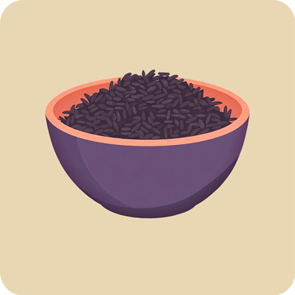
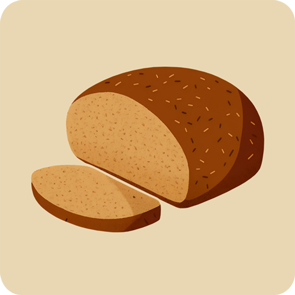
Rye Bread
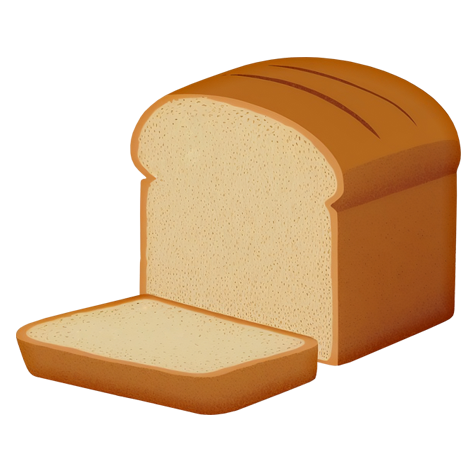
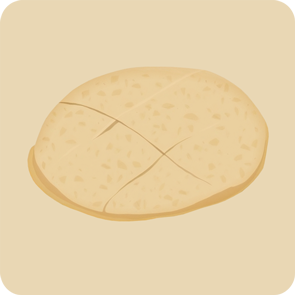
Wheat Bread
A classic bread made from whole or refined wheat flour, wheat bread is widely consumed worldwide for its soft texture and mild flavor, often used for sandwiches and toast.
150
1 medium slice
(60 grams)
CAL
B
Nutri-Score
Balanced mix of fiber, protein, and essential nutrients.
Value per 100 grams & per cup (120gr):
245 kcal | 295 kcal
Protein
12 grams | 14.5 grams
Fats
2 grams | 2.5 grams
Carbohydrates
40 grams | 50 grams
Fiber
6 grams | 7 grams
Vitamins & Nutrients
- Vitamin B9 (Folate): Supports cell growth and metabolism.
- Iron: Essential for oxygen transport in the blood.
- Calcium: Important for healthy bones and teeth.
- Magnesium: Supports muscle and nerve function.
- Vitamin B1 (Thiamine): Helps convert carbohydrates into energy.
Satiety and Feelings
Wheat bread’s fiber and protein content help keep you feeling full longer and support steady energy levels.
What does 100 g look like?
About 2.5 slices of wheat bread.
What does 2000 | 2500 calories look like?
About 9–11 slices or 2 cups (1.2–1.4 kilograms / 2.6–3.1 lbs).
Daily Value per 100 milliliter %
Did you know?
Whole wheat bread contains more fiber and nutrients than white bread, aiding digestion and heart health.
Wheat bread is one of the most commonly consumed breads globally due to its versatility and mild flavor.
Enriched wheat breads have added folic acid to help prevent neural tube defects in pregnancy.
The development of commercial wheat bread greatly expanded with the invention of the automatic bread slicer in 1928.
Drawbacks ⚠️
Refined wheat bread can be lower in fiber and nutrients compared to whole wheat versions.
Some commercial wheat breads contain added sugars and preservatives.
Wheat bread contains gluten, which is unsuitable for people with celiac disease or gluten sensitivity.