Macaroon

Corn Tortilla
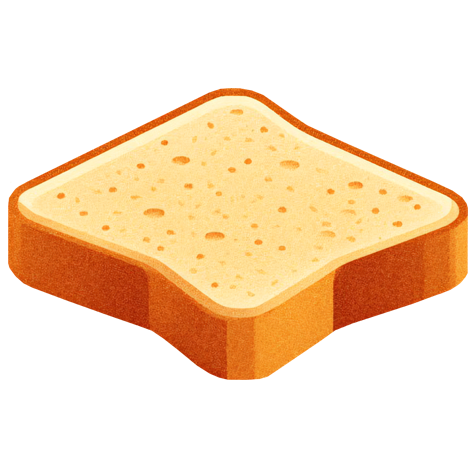
Rusk
A crunchy, golden snack with a history as old as bread itself, rusk is the perfect companion for your tea or coffee break. Its crisp texture and mild flavor make it a beloved choice across cultures.
60
1 rusk
(15 grams)
CAL
C
Nutri-Score
Contains carbohydrates and some fiber, but relatively low in protein and fats.
Value per 100 grams & per cup (120gr):
350 kcal | 420 kcal
Protein
8 grams | 10 grams
Fats
5 grams | 6 grams
Carbohydrates
70 grams | 84 grams
Fiber
5 grams | 6 grams
Vitamins & Nutrients
- Vitamin B1 (Thiamine): Supports energy metabolism.
- Vitamin B3 (Niacin): Helps maintain healthy skin and nerves.
- Iron: Important for blood oxygen transport.
- Calcium: Supports bone health.
Satiety and Feelings
Rusk is light and crunchy, providing quick energy through carbohydrates but limited lasting fullness due to low protein and fat content.
What does 1 piece look like?
About the size of a small biscuit, roughly 7 centimeters (2.75 inches) long, 4 centimeters (1.5 inches) wide, and 1 centimeter (0.4 inches) thick.
What does 100 g look like?
About 3 to 4 pieces of rusk (loose, dry pieces).
What does 2000 | 2500 calories look like?
About 20 pieces or 2 cups loose pieces (600 grams / 1.32 pounds).
Daily Value per 100 grams %
Did you know?
Rusk originated as a way to preserve bread longer by double baking it until dry and crunchy.
It is commonly eaten with tea or coffee in many cultures as a light snack.
Due to its dryness, rusk can help soothe sore throats when dipped in warm liquids.
Some rusks are fortified with added vitamins and minerals to boost nutrition.
Drawbacks ⚠️
Contains refined carbohydrates which can cause blood sugar spikes if eaten in excess.
Low in protein and healthy fats, meaning it’s not very filling by itself.
Some commercial rusks may contain added sugars and preservatives.