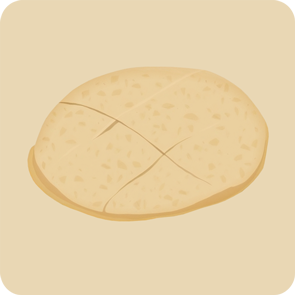
Boule
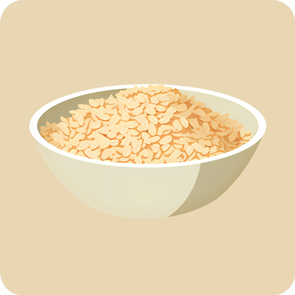
Brown Rice
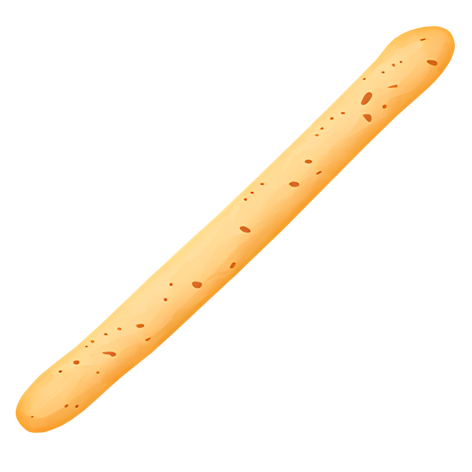
Breadstick
Long, thin, and crunchy, breadsticks are often served as appetizers or snacks and pair well with soups, dips, and cheese.
105
1 medium stick
(30 grams)
CAL
D
Nutri-Score
Low in fat and sugar but often lack fiber and nutrients.
Value per 100 grams & per cup (140gr):
370 kcal | 518 kcal
Protein
10 grams | 15.5 grams
Fats
4 grams | 5.5 grams
Carbohydrates
70 grams | 100 grams
Fiber
3 grams | 4 grams
Vitamins & Nutrients
- Iron: Helps transport oxygen in the body.
- Folate (Vitamin B9): Essential for red blood cell formation.
- Magnesium: Supports nerve and muscle function.
- Calcium: Strengthens bones and teeth.
Satiety and Feelings
Breadsticks are light and crisp, making them a good starter or snack, but their low fiber and protein mean they don’t satisfy hunger for long.
What does 100 g look like?
About 8 medium breadsticks or 1 cup broken.
What does 2000 | 2500 calories look like?
Roughly 57–71 breadsticks or 5½ cups broken (570 grams / 1.26 lbs.)
Daily Value per 100 grams %
Did you know?
Breadsticks, or grissini, originated in 17th-century Italy, specifically in Turin.
Legend says they were created to help a sickly duke digest food more easily.
Traditionally hand-rolled, today they come in baked, twisted, or flavored varieties.
In Italy, they are often served in restaurants instead of bread rolls.
Drawbacks ⚠️
Usually made with refined white flour, offering little fiber.
Low protein means limited satiety.
Some commercial varieties contain preservatives or added oils.
Can be high in sodium depending on preparation.