English Muffin

Focaccia
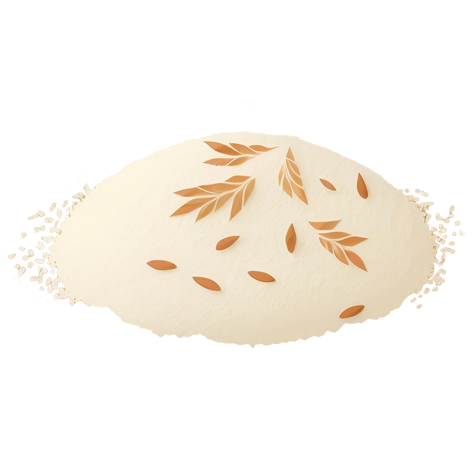
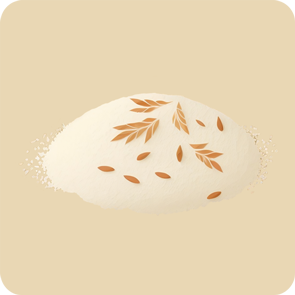
Flour
A pantry staple made by refining wheat to remove the bran and germ, resulting in a fine white flour used in everything from bread and pasta to pastries.
30
1 tbsp
(60 grams)
CAL
D
Nutri-Score*
All-purpose flour provides carbohydrates and iron, but lacks fiber, protein, and many micronutrients.
Value per 100 grams & per cup (120gr):
365 kcal | 455 kcal
Protein
10 grams | 12 grams
Fats
1 gram | 1.5 grams
Carbohydrates
75 grams | 95 grams
Fiber
3 grams | 3.5 grams
Vitamins & Nutrients
- Iron: Supports oxygen transport and energy production.
- Folate: Important for cell growth and DNA synthesis (in enriched flours).
- Vitamin B1 (Thiamine): Helps convert food into energy.
- Niacin (B3): Supports metabolism and nervous system health.
Satiety and Feelings
Refined flour digests quickly, providing a quick energy boost but little long-term fullness due to its low fiber and low fat content.
What does 100 g look like?
About ¾ cup of flour (loose).
What does 2000 | 2500 calories look like?
Roughly 5 ¾ – 7 ⅓ cups, or 585 – 732 grams / 1.29 – 1.61 lbs.
Whole grain flour *
Whole grain flour generally have a higher Nutri-Score (going as high as an A score) due to their higher fiber, vitamin, and mineral content.
Daily Value per 100 grams %
Did you know?
All-purpose flour is usually enriched with vitamins like iron, B1, B2, and niacin to make up for nutrients lost during processing.
The word “flour” comes from the Old French “fleur”, meaning “blossom”—referring to the finest part of the grain.
In baking, it forms gluten when mixed with water, which gives bread its chewy structure.
It has a long shelf life but can go rancid if stored in warm, humid environments.
There are different types of wheat flour—like durum for firm pasta, all-purpose for versatile baking, bread flour for chewy textures, cake flour for light cakes, and whole wheat for extra fiber—each have unique protein levels that affect their cooking uses.
Drawbacks ⚠️
Lacks fiber, which can lead to blood sugar spikes and less satiety.
Made from refined grains, removing the nutrient-dense bran and germ.
Often overconsumed in processed foods, contributing to weight gain and metabolic issues.
Low in essential fats and protein, making it less balanced as a staple food.