Sticky Rice

Udon
Tapioca
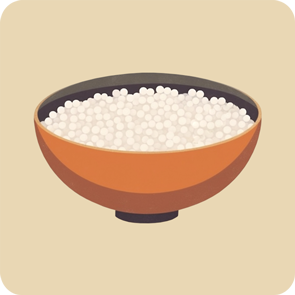
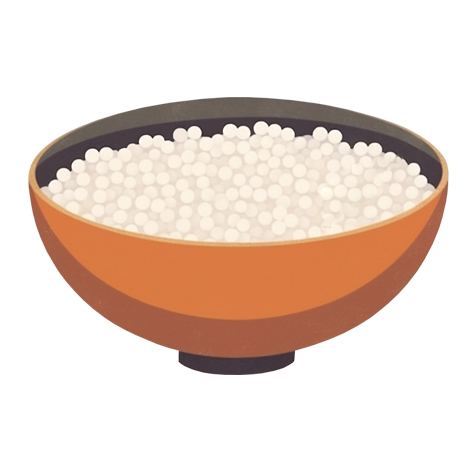
Often used in puddings, bubble tea, or as a thickener, tapioca is a bland, chewy starch extracted from cassava root. It's popular in many gluten-free diets.
245
1 cup, cooked
(150 grams)
CAL
D
Nutri-Score
Naturally gluten-free but lacks fiber, protein, and essential vitamins.
Value per 100 grams & per cup (150gr):
160 kcal | 245 kcal
Protein
0.2 grams | 0.3 grams
Fats
0.2 grams | 0.3 grams
Carbohydrates
40 grams | 60 grams
Fiber
0.5 grams | 0.8 grams
Vitamins & Nutrients
- Calcium: Supports bone health.
- Iron: Essential for oxygen transport in blood.
- Manganese: Helps in metabolism and bone formation.
- Potassium: Assists in fluid balance and muscle function.
Satiety and Feelings
Uncooked tapioca is not eaten as-is, but once cooked, it becomes chewy and filling in texture, though nutritionally empty. It digests quickly, offering a fast energy spike but no lasting fullness.
What does 100 g look like?
About ½ cup of cooked tapioca pearls or a small bowlful.
What does 2000 | 2500 calories look like?
Roughly 5 ½ cups cooked or 11 cups uncooked pearls (2,325 grams / 5.1 lbs).
Daily Value per 100 grams %
Did you know?
Tapioca is made from the starch of the cassava root, a staple crop in South America and Africa.
It contains no gluten, nuts, or grains, making it ideal for allergy-friendly recipes.
Tapioca pearls are the chewy balls in bubble tea (boba).
It has little taste on its own but takes on flavors of added ingredients, like milk or sugar.
Drawbacks ⚠️
Very low in nutrients — mainly empty calories with little protein or fiber.
High glycemic index, which may spike blood sugar levels.
As a processed starch, it lacks the natural benefits of whole foods.
May contribute to weight gain if eaten in large quantities without balancing nutrients.