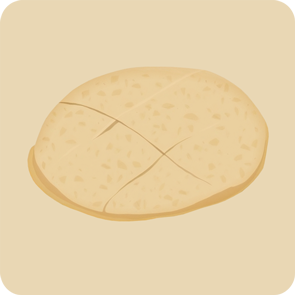
Wheat Bread
Sourdough Bread

Rye Bread
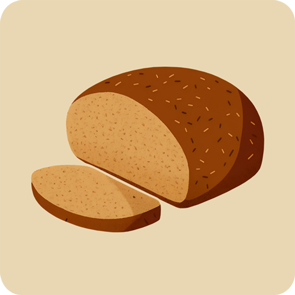
A dense, slightly tangy bread made primarily from rye flour, rye bread is a staple in many Northern and Eastern European cuisines and is prized for its earthy flavor and chewy crumb.
130
1 medium slice
(50 grams)
CAL
B
Nutri-Score
Rich in fiber and minerals.
Value per 100 grams & per cup (120gr):
260 kcal | 310 kcal
Protein
8 grams | 9.5 grams
Fats
1.5 grams | 2 grams
Carbohydrates
48 grams | 57.5 grams
Fiber
5 grams | 6 grams
Vitamins & Nutrients
- Iron: Essential for oxygen transport.
- Calcium: Supports bone strength.
- Vitamin B9 (Folate): Important for DNA synthesis.
- Magnesium: Aids nerve and muscle function.
- Vitamin B1 (Thiamine): Helps convert food into energy.
Satiety and Feelings
Rye bread’s high fiber content promotes feelings of fullness and aids digestion, making it a satisfying choice for meals.
What does 100 g look like?
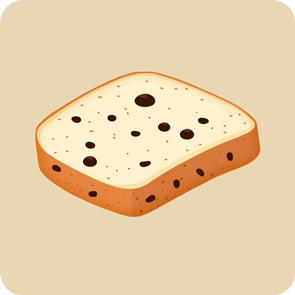
About 2.5 slices of rye bread.
What does 2000 | 2500 calories look like?
About 9.5–12 slices or 2 cups (1.2–1.4 kilograms / 2.6–3.1 lbs).
Daily Value per 100 milliliter %
Did you know?
Rye bread has been a staple grain in Europe for centuries, especially in Scandinavia and Eastern Europe.
It contains more fiber than wheat bread, which can help with digestion and blood sugar control.
Rye flour has a unique enzyme profile that causes rye bread to be denser and moister than wheat bread.
Rye bread is often used in traditional dishes like the famous Swedish limpa and German pumpernickel.
Drawbacks ⚠️
Rye bread contains gluten, so it is not suitable for those with celiac disease or gluten intolerance.
Its strong flavor and dense texture might not appeal to everyone.
Some commercial rye breads contain added sugars or preservatives.