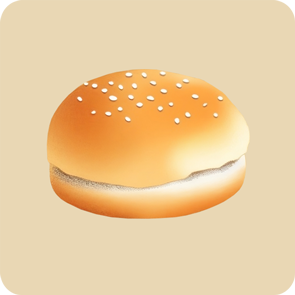
Bulkie Roll

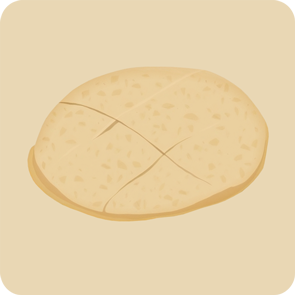
Challah

Bulgur
Bulgur is cracked wheat that has been parboiled, dried, and crushed. It cooks quickly compared to other whole grains and is a staple in Middle Eastern and Mediterranean dishes.
150
1 cup, cooked
(180 grams)
CAL
B
Nutri-Score
High in fiber and complex carbohydrates, low in fat.
Value per 100 grams & per cup (180gr):
80 kcal | 150 kcal
Protein
3.5 grams | 6.5 grams
Fats
0.2 grams | 0.35 grams
Carbohydrates
18.5 grams | 33 grams
Fiber
4.5 grams | 8 grams
Vitamins & Nutrients
- Iron: Supports oxygen transport and energy production.
- Magnesium: Aids muscle and nerve function.
- Vitamin B3 (Niacin): Helps metabolism and skin health.
- Vitamin B6 (Pyridoxine): Supports brain function and mood regulation.
Satiety and Feelings
Bulgur’s high fiber and complex carbs make it slowly digested, offering long-lasting fullness. It’s light on the stomach and keeps you energized without feeling heavy.
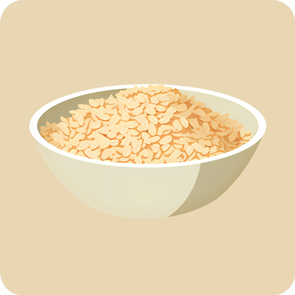
What does 100 g look like?
About ⅔ cup dry bulgur — a loose heap of grains.
What does 2000 | 2500 calories look like?
Approximately 3 cups dry bulgur = 540 grams / 1.19 lbs).
Daily Value per 100 grams %
Did you know?
Bulgur has been eaten for thousands of years, especially in the Middle East and Mediterranean.
It’s made by parboiling, drying, and cracking wheat kernels, so it cooks faster than most whole grains.
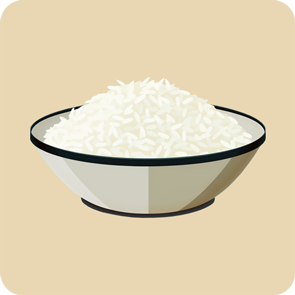
Unlike white rice, bulgur retains most of its bran and germ, making it more nutritious.
It’s a low glycemic index food, great for blood sugar stability.
Drawbacks ⚠️
Contains gluten, so it’s not suitable for people with celiac disease.
Though nutritious, it’s still a carbohydrate-rich food—portion control matters for those managing blood sugar or weight.
Its wheat origin may not suit those on grain-free or paleo diets.