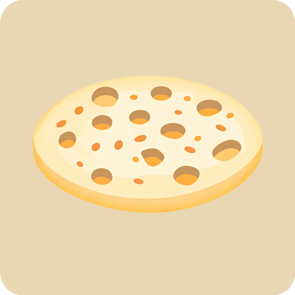
Crispbread

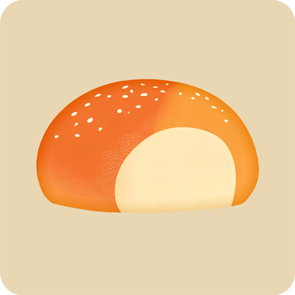
Cross Bun

Croissant
A light, flaky pastry made from layers of buttery dough, the croissant is a classic French breakfast item, enjoyed plain or filled with ingredients like chocolate or ham and cheese.
245
1 medium pastry
(60 grams)
CAL
E
Nutri-Score
Provides some B vitamins and iron, but its high saturated fat and refined flour.
Value per 100 grams & per cup (100gr):
405 kcal
Protein
8.5 grams
Fats
25 grams
Carbohydrates
50 grams
Fiber
2.5 grams
Vitamins & Nutrients
- Iron: Supports red blood cell production.
- Folate (B9): Important for cell growth and development.
- Vitamin B1 (Thiamine): Aids in energy metabolism.
- Phosphorus: Helps build strong bones and supports energy storage and use.
Satiety and Feelings
Due to its high fat content, a croissant provides quick energy and a satisfying mouthfeel, but its low fiber and protein may not keep you full for long.
What does 100 g look like?
Roughly 1 ¾ medium croissants or about 1 ⅛ cups torn pieces.
What does 2000 | 2500 calories look like?
Roughly 7 ½ croissants or 6 cups torn pieces (420 grams / 0.93 lbs)
Daily Value per 100 grams %
Did you know?
The croissant’s origin is linked to Austria, not France — it evolved from the Kipferl, a crescent-shaped pastry.
It became popular in France after Marie Antoinette, who was Austrian, introduced it to the French court.
Making a true croissant requires a process called lamination, which involves folding butter into dough multiple times.
In France, “croissant au beurre” means it’s made with real butter, a mark of quality.
Drawbacks ⚠️
Very high in saturated fats due to the use of butter.
Typically made with refined flour, which offers little fiber.
May contain added sugar and salt, especially in commercial versions.
Not ideal for those watching caloric intake or cholesterol.