Cereal
Chocolate Croissant

Ciabatta
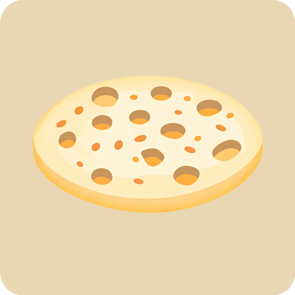
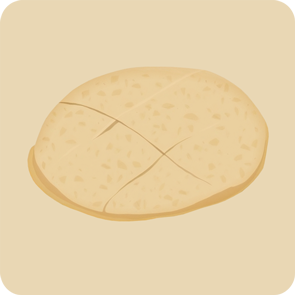
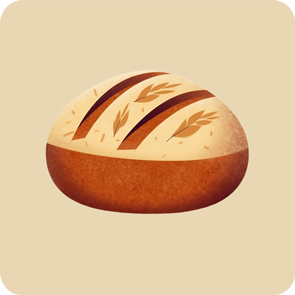
Ciabatta is a rustic Italian bread with a crisp crust and an airy, open crumb. Known for its chewy texture, it’s a popular choice for sandwiches and paninis thanks to its ability to soak up oils and dressings.
230
1 medium slice
(85 grams)
CAL
C
Nutri-Score *
Provides iron and B vitamins for energy support but is low in fiber and contains moderate sodium.
Value per 100 grams & per cup (140gr):
270 kcal | 380 kcal
Protein
9 grams | 12.5 grams
Fats
2 grams | 2.8 grams
Carbohydrates
57 grams | 80 grams
Fiber
3 grams | 4 grams
Vitamins & Nutrients
- Iron: Important for carrying oxygen in the blood.
- B Vitamins: Support energy metabolism.
- Magnesium: Helps with muscle and nerve function.
Satiety and Feelings
Ciabatta’s light, chewy texture provides pleasant satisfaction, though its moderate fiber content means it may not keep you full for long.
What does 100 g look like?
About 1 ⅔ medium slices or roughly ¾ cup sliced.
What does 2000 | 2500 calories look like?
Around 10 medium slices or 7 ½ cups sliced (600 grams / 1.32 pounds)
Whole grain breads
Whole grain breads generally have a higher Nutri-Score (going as high as an A score) due to their higher fiber, vitamin, and mineral content.
Daily Value per 100 grams %
Did you know?
The name “ciabatta” means “slipper” in Italian, inspired by the bread’s unique shape.
It was developed in the early 1980s as an Italian response to the popularity of French baguettes.
Its high hydration dough is what gives ciabatta its signature open holes and chewy crust.
It’s a staple in Italian sandwiches and especially popular for making paninis.
Drawbacks ⚠️
Made from refined white flour, ciabatta is low in fiber compared to whole grain breads.
Contains moderate sodium, which could affect blood pressure if eaten in excess.
The open crumb texture means it’s lighter but less filling than denser breads.