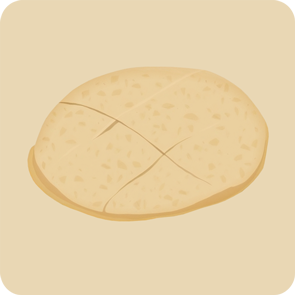
Cross Bun

Crumpet

Croutons
Small, toasted or fried bread cubes often seasoned with herbs and spices, croutons are commonly used in salads and soups for added texture and flavor.
120
½ cup
(30 grams)
CAL
D
Nutri-Score
Low in essential nutrients and often high in sodium and fats.
Value per 100 grams & per cup (60gr):
405 kcal | 245 kcal
Protein
12 grams | 7 grams
Fats
10 grams | 6 grams
Carbohydrates
68 grams | 40 grams
Fiber
4 grams | 2.5 grams
Vitamins & Nutrients
- Iron: Supports healthy red blood cells.
- Calcium: Essential for bones and teeth.
- Vitamin B1 (Thiamine): Helps convert food into energy.
- Vitamin B3 (Niacin): Supports skin and nerve health.
Satiety and Feelings
Croutons are crispy and satisfying in the short term but not filling due to their low fiber and moderate fat content. Often more of a garnish than a substantial source of satiety.
What does 100 g look like?
Roughly 1 ¾ cups of croutons.
What does 2000 | 2500 calories look like?
About 4 ½ cups of croutons = 460 grams / 1.01 lbs
Daily Value per 100 grams %
Did you know?
Croutons originated from the French word croûton, meaning “little crust.”
Originally used to revive stale bread, they became a common culinary garnish.
Croutons can be made by baking or frying cubed bread with herbs, butter, or oil.
Popular in Caesar salads, soups, and even as snacks.
Drawbacks ⚠️
Often high in sodium, which may raise blood pressure if consumed in large amounts.
Usually made from refined white bread, lacking whole grain benefits.
Can contain added oils and preservatives, especially in packaged varieties.
Low in fiber and essential nutrients, offering limited health value.