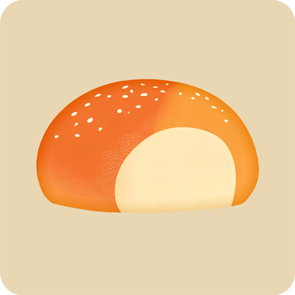
Dinner Roll

Flour

English Muffin
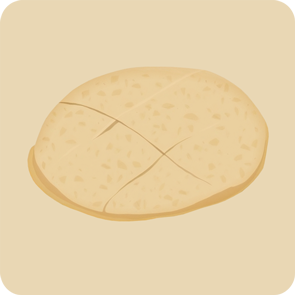
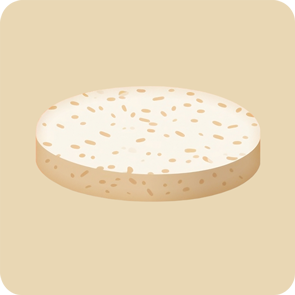
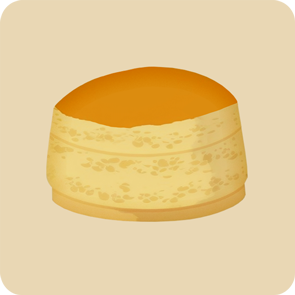
A round, flat bread that’s split and toasted, the English muffin has a crispy outside and soft inside. Often used for breakfast sandwiches, it’s a staple in British and American kitchens.
130
1 medium muffin
(60 grams)
CAL
C
Nutri-Score
Provides iron, B vitamins, and some calcium, but often made with refined flour, lowering fiber and micronutrient content.
Value per 100 grams & per cup (120gr):
250 kcal | 300 kcal
Protein
9 grams | 11 grams
Fats
1.5 grams | 2 grams
Carbohydrates
50 grams | 60 grams
Fiber
2 grams | 2.5 grams
Vitamins & Nutrients
- Iron: Crucial for red blood cell formation.
- Vitamin B1 (Thiamin): Supports energy metabolism.
- Phosphorus: Helps with bone strength and cellular function.
- Calcium: Aids in maintaining strong bones and teeth.
Satiety and Feelings
English muffins are light yet chewy, with moderate satiety depending on toppings. Whole wheat versions offer more fiber and fullness.
What does 100 g look like?
About 1 ½ English muffins or 1 ⅓ cups torn.
What does 2000 | 2500 calories look like?
About 15 English muffins or 13 cups torn (920 grams / 2.03 lbs).
Daily Value per 100 grams %
Did you know?
Despite the name, English muffins were developed in the U.S. by Samuel Bath Thomas, a British immigrant, in the late 1800s.
The fork-split method creates the signature nooks and crannies that hold butter and jam.
Popular for Eggs Benedict, English muffins are a breakfast classic.
The original recipe was modeled after a crumpet, but made firmer and more sliceable.
Drawbacks ⚠️
Most store-bought versions are made with refined white flour, reducing fiber and nutrients.
Low in fats and protein, making them less filling without toppings.
May contain added sugars or preservatives.
Salt content can be moderate to high in some varieties.