Breadcrumbs
Breadstick
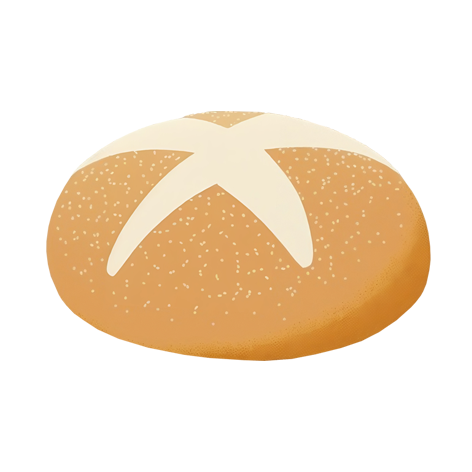
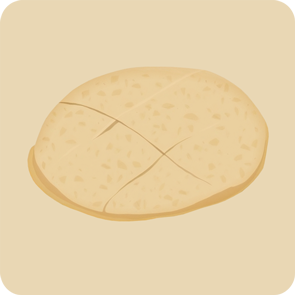
Boule
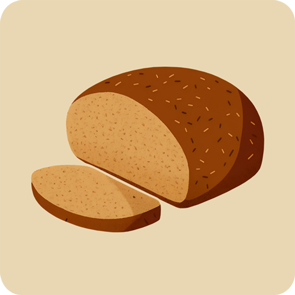
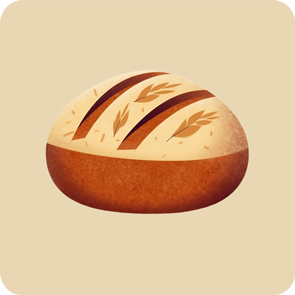
A round loaf named for its ball-like shape, this bread has a crusty exterior and chewy crumb, commonly eaten with soups, cheeses, or as a sandwich base.
230
1 medium slice
(85 grams)
CAL
C
Nutri-Score *
Often made from simple ingredients and offers moderate nutrition with some fiber and protein.
Value per 100 grams & per cup (140gr):
270 kcal | 378 kcal
Protein
10 grams | 12.5 grams
Fats
1 gram | 1.5 grams
Carbohydrates
55 grams | 80 grams
Fiber
2.7 grams | 3.8 grams
Vitamins & Nutrients
- Iron: Important for oxygen transport in blood.
- B Vitamins: Support energy metabolism.
- Magnesium: Supports muscle and nerve function.
Satiety and Feelings
The boule’s thick crust and chewy interior provide a satisfying texture and moderate fullness. Its fiber content can help sustain energy longer than typical white bread.
What does 100 g look like?
About a small wedge or slice that could fit in the palm of your hand or roughly half a cup of torn bread pieces
What does 2000 | 2500 calories look like?
About 1 and a half to 2 medium boules.
Whole grain breads
Whole grain breads generally have a higher Nutri-Score (going as high as an A score) due to their higher fiber, vitamin, and mineral content.
Daily Value per 100 grams %
Did you know?
The boule is one of the oldest French bread shapes, dating back to medieval times.
Its round shape was practical for even baking in wood-fired ovens.
Traditional boules are often made with natural sourdough starters, giving a tangy flavor.
The word boule literally means “ball” in French, referring to its shape.
Drawbacks ⚠️
Often made with refined flour, resulting in lower fiber than whole grain breads.
Can be dense and high in carbohydrates.
Store-bought boules may contain preservatives and additives.