Bulgur
Cereal

Challah
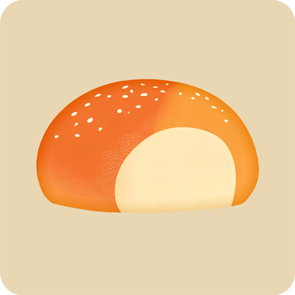
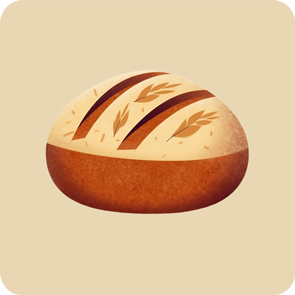
A slightly sweet, braided bread traditionally eaten during Jewish Sabbath and holidays. Made with eggs, oil, and sometimes sugar or honey, it has a soft, rich interior and golden crust.
100
1 medium slice
(30 grams)
CAL
D
Nutri-Score *
Iron and B vitamins, but its low fiber and added sugar.
Value per 100 grams & per cup (120gr):
330 kcal | 395 kcal
Protein
9.5 grams | 11.5 grams
Fats
8 grams | 9.5 grams
Carbohydrates
55 grams | 66 grams
Fiber
2.5 grams | 3 grams
Vitamins & Nutrients
- Iron: Essential for red blood cell production.
- B Vitamins (especially B2 and B9): Help convert food into energy.
- Selenium: Supports immunity and thyroid health.
Satiety and Feelings
Challah’s richness from eggs and oil gives it a satisfying bite, but its low fiber means it may not sustain fullness as long as whole grain breads.
What does 100 g look like?
Roughly 1 ¼ thick slices or about 1 ⅓ cups diced.
What does 2000 | 2500 calories look like?
About 7 thick slices or 9 ½ cups diced
Whole grain breads
Whole grain breads generally have a higher Nutri-Score (going as high as an A score) due to their higher fiber, vitamin, and mineral content.
Daily Value per 100 grams %
Did you know?
Challah is a symbolic bread, often braided with three, four, or six strands to represent unity or religious themes.
It’s often dipped in honey instead of salt during Rosh Hashanah to wish for a sweet new year.
Eggs and oil give it a distinctive texture and golden color.
While traditionally pareve (non-dairy), it is often made with honey or sugar for extra flavor.
Drawbacks ⚠️
Made with refined flour and added sugars, challah offers less fiber and fewer long-lasting nutrients.
Contains eggs and oil, which raise calorie content.
Not ideal for those seeking low-glycemic or whole grain options.