Arepa

Black Rice

Bagel
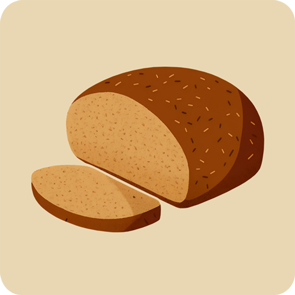
Soft and fluffy, white bread is made from refined wheat flour and is a popular staple in sandwiches and toasts. It's often fortified, but lacks the natural fiber found in whole grains.
250
1 bagel
(100 grams)
CAL
C
Nutri-Score *
Contains carbohydrates for quick energy, but low in fiber and micronutrients due to refining.
Value per 100 grams & per cup (120gr):
250 kcal | 300 kcal
Protein
9 grams | 10.5 grams (from enriched wheat flour).
Fats
1.5 grams | 1.8 grams
Carbohydrates
48 grams | 57.5 grams
Fiber
2 grams | 2.5 grams
Vitamins & Nutrients
- Iron: Supports red blood cell formation.
- Folate (if enriched): Important for cell growth.
- B Vitamins: Help convert food into energy.
Satiety and Feelings
Bagels are filling due to their density, but because they’re mostly refined carbs, the energy can lead to a quick spike and crash unless paired with protein or fat. Whole grain versions offer better satiety.
What does 100 g look like?
1 medium plain bagel or about 1 cup sliced pieces.
What does 2000 | 2500 calories look like?
8 medium bagels or 6 ⅔ cups sliced (800 grams / 1.76 lbs).
Whole grain breads
Whole grain breads generally have a higher Nutri-Score (going as high as an A score) due to their higher fiber, vitamin, and mineral content.
Daily Value per 100 grams %
Did you know?
Bagels originated in Jewish communities of Poland in the 1600s and were once given to women after childbirth for strength.
The boiling step creates the bagel’s signature chewy texture and glossy crust.
A standard plain bagel can have as many calories as 4 slices of bread.
Whole wheat or sprouted grain bagels offer more fiber and micronutrients.
Drawbacks ⚠️
High in refined carbohydrates, which can lead to blood sugar spikes.
Low in fiber, unless made with whole grains.
High calorie density for a small volume of food.
May contain added sugars and preservatives in store-bought varieties.