Pretzel Stick
Quinoa
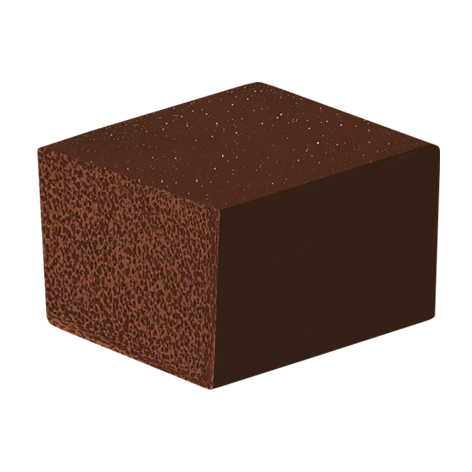
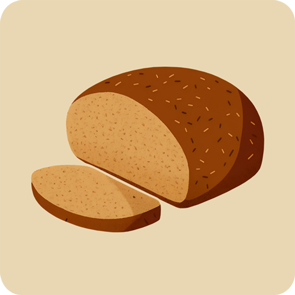
Pumper-
nickel
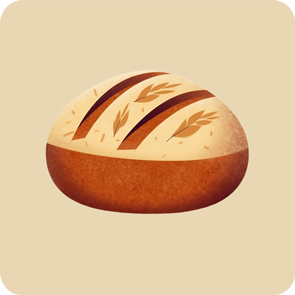
A traditional German bread, pumpernickel is made from coarse rye flour and baked slowly, giving it its signature dense texture and rich, slightly sweet flavor.
130
1 medium slice
(50 grams)
CAL
B
Nutri-Score
High fiber and complex carbohydrates, offering good protein and essential minerals with low fat content.
Value per 100 grams & per cup (120gr):
250 kcal | 300 kcal
Protein
8 grams | 9.5 grams
Fats
1 gram | 1.2 grams
Carbohydrates
50 grams | 60 grams
Fiber
6 grams | 7 grams
Vitamins & Nutrients
- Vitamin B3 (Niacin): Supports energy metabolism.
- Vitamin B6: Important for brain health and mood regulation.
- Iron: Helps oxygen transport in blood.
- Magnesium: Supports muscle and nerve function.
Satiety and Feelings
Thanks to its high fiber and protein, pumpernickel provides a long-lasting feeling of fullness and steady energy release.
What does 100 g look like?
About 2 ½ slices of pumpernickel bread.
What does 2000 | 2500 calories look like?
About 8 – 10 slices (320 – 400 grams / 0.7 – 0.88 lbs).
Daily Value per 100 grams %
Did you know?
Pumpernickel bread is traditionally baked for up to 24 hours at low heat, which develops its deep color and rich flavor.
The dark color results from the Maillard reaction during baking, not just from rye flour.
Pumpernickel is naturally low in fat but rich in complex carbs and fiber.
Its dense texture helps it stay fresh longer than many lighter breads.
Drawbacks ⚠️
The dense texture may not suit everyone’s preference for lighter bread.
Contains gluten, so it’s unsuitable for gluten-free diets.
High in carbohydrates, so portion control is important for blood sugar management.
Lower in some vitamins compared to whole wheat bread.