Grains

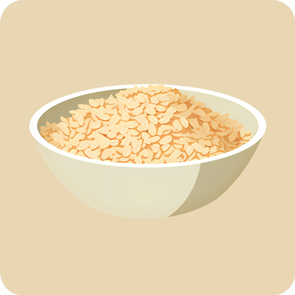
Amaranth

Grits
A creamy, comforting dish made from ground corn, grits are often served hot for breakfast or as a side, sometimes enriched with butter, cheese, or savory toppings.
175
1 cup, cooked
(240 grams)
CAL
C
Nutri-Score
Low in fat and a source of carbohydrates, but not very nutrient-dense unless fortified.
Value per 100 grams & per cup (240gr):
70 kcal | 175 kcal
Protein
1.5 grams | 3.5 grams
Fats
0.2 grams | 0.5 grams
Carbohydrates
15 grams | 35 grams
Fiber
1.5 grams | 3 grams
Vitamins & Nutrients
- Folate: Important for cell division and red blood cell formation.
- Iron (fortified): Supports oxygen transport in the blood.
- Vitamin B6: Helps with brain development and function.
- Magnesium: Supports muscle and nerve function.
Satiety and Feelings
Grits are soft, warm, and comforting, providing quick energy from carbohydrates. However, because they are low in fiber and protein, they may not keep you full for long unless combined with other foods.
What does 100 g look like?
About ½ cup cooked grits (loose and fluffy).
What does 2000 | 2500 calories look like?
14 cups cooked grits / 3.4 kilograms / 7.5 lbs.
Daily Value per 100 milliliter %
Did you know?
Grits are a traditional food of the American South, especially in states like Georgia and South Carolina.
They are made from ground corn, often hominy (corn treated with an alkali).
Instant grits were introduced in the 1970s for convenience.
In 1976, grits became the official prepared food of South Carolina.
Drawbacks ⚠️
Naturally low in fiber and protein, which can make them less filling.
Instant grits may have added sodium and preservatives.
Often eaten with butter, cheese, or gravy, which adds saturated fats and sodium.