Scone
Soda Bread
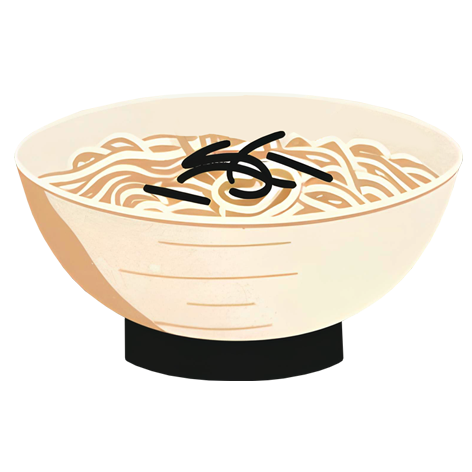
Soba
Soba noodles have a unique earthy taste thanks to the buckwheat, and they’re often served chilled with dipping sauce or in hot broth.
115
1 cup, cooked
(115 grams)
CAL
A
Nutri-Score
Contains carbohydrates for quick energy, but low in fiber and micronutrients due to refining.
Value per 100 grams & per cup (115gr):
100 kcal | 115 kcal
Protein
5 grams | 5.5 grams
Fats
0.1 grams | 0.1 grams
Carbohydrates
20 grams | 25 grams
Fiber
1 grams | 1.1 grams
Vitamins & Nutrients
- Manganese: Supports bone health and metabolism.
- Magnesium: Important for muscle and nerve function.
- Folate (Vitamin B9): Essential for DNA synthesis and repair.
- Thiamine (Vitamin B1): Helps convert food into energy.
Satiety and Feelings
Thanks to its higher fiber and protein content, soba noodles provide longer-lasting fullness compared to typical wheat noodles.
What does 100 g look like?
About 1 cup uncooked soba noodles (loosely packed dry).
What does 2000 | 2500 calories look like?
6 ½ to 8 cups uncooked soba noodles (600 – 750 grams (1.3 – 1.65 lbs).
Daily Value per 100 grams %
Did you know?
Soba noodles have been a staple in Japanese cuisine for centuries.
The word “soba” means “buckwheat” in Japanese.
In Japan, eating soba on New Year’s Eve is a tradition believed to bring longevity and good luck.
Soba noodles can be served hot or cold, making them versatile for all seasons.
Drawbacks ⚠️
Commercial soba noodles often contain some wheat flour, so they may not be gluten-free.
Some soba noodles can be fragile and prone to breaking if overcooked.
Though more nutritious than wheat noodles, soba still lacks certain essential vitamins unless paired with balanced ingredients.