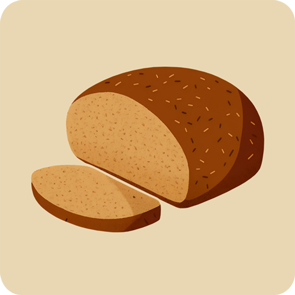
Rye Bread
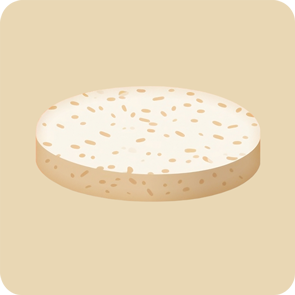
Potato Bread
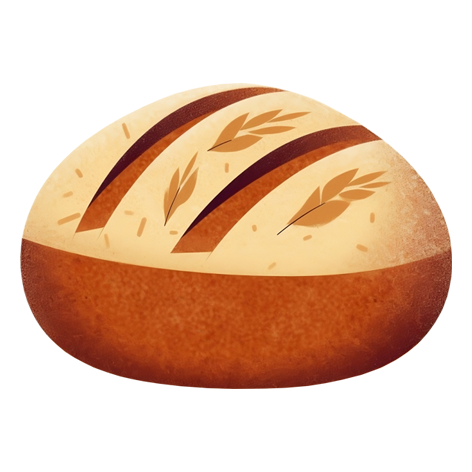
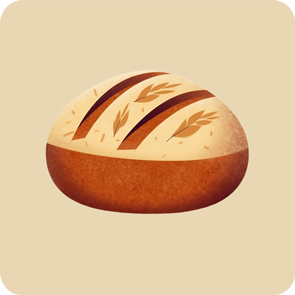
Sourdough Bread
A rustic bread made through natural fermentation of dough using wild yeast and lactobacilli, sourdough bread is known for its tangy flavor, chewy texture, and crisp crust.
160
1 medium slice
(60 grams)
CAL
B
Nutri-Score
Offers beneficial probiotics from natural fermentation, with moderate fiber and a lower glycemic index.
Value per 100 grams & per cup (120gr):
265 kcal | 318 kcal
Protein
9 grams | 11 grams
Fats
1.5 grams | 2 grams
Carbohydrates
50 grams | 60 grams
Fiber
2 grams | 2.5 grams
Vitamins & Nutrients
- Iron: Supports oxygen transport and energy production.
- Calcium: Important for bone health.
- Vitamin B9 (Folate): Essential for cell division and DNA synthesis.
- Magnesium: Helps muscle and nerve function.
- Vitamin B1 (Thiamine): Supports energy metabolism.
Satiety and Feelings
Sourdough’s fermentation process helps make nutrients more bioavailable and can improve digestion, offering steady energy and fullness.
What does 100 g look like?
About 2 medium slices of sourdough bread.
What does 2000 | 2500 calories look like?
About 9–11 slices or 2 cups (1.2–1.4 kilograms / 2.6–3.1 lbs).
Daily Value per 100 grams %
Did you know?
Sourdough bread is made using wild yeast and natural fermentation, which improves flavor and digestibility.
The fermentation process can lower the bread’s glycemic index, making it a better option for blood sugar control.
Sourdough was one of the first leavened breads known to humans, dating back thousands of years.
The tangy taste comes from lactic acid produced during fermentation.
Drawbacks ⚠️
Sourdough bread may contain gluten, which is unsuitable for people with celiac disease or gluten sensitivity.
It can be denser and more filling, which may not suit everyone’s preference.
Homemade or artisanal sourdough can be more expensive and less shelf-stable than commercial breads.