Flour

Baguette

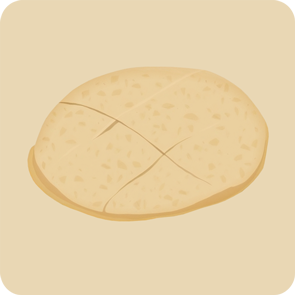
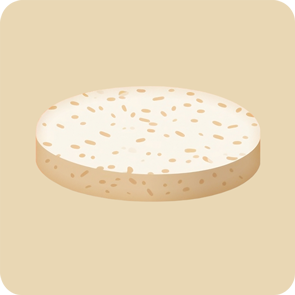
Focaccia
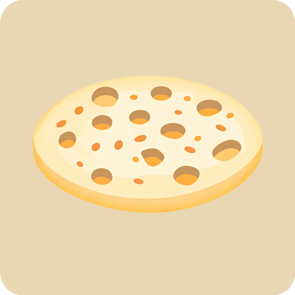
A soft, olive oil–rich Italian flatbread, focaccia is often topped with herbs like rosemary and sea salt, making it a flavorful side or base for sandwiches.
270
1 medium slice
(80 grams)
CAL
D
Nutri-Score
Provides carbohydrates and some B vitamins, but its moderate fat and sodium.
Value per 100 grams & per cup (120gr):
265 kcal | 370 kcal
Protein
7.5 grams | 10.5 grams
Fats
8 grams | 11 grams
Carbohydrates
40 grams | 56 grams
Fiber
2 grams | 2.8 grams
Vitamins & Nutrients
- Vitamin B3 (Niacin): Supports metabolism and skin health.
- Folate (B9): Important for cell growth and development.
- Magnesium: Supports nerve and muscle function.
- Potassium: Helps maintain fluid balance and muscle function.
Satiety and Feelings
The olive oil adds richness, giving focaccia a satisfying texture, but its moderate fiber and protein mean it offers only moderate fullness.
What does 100 g look like?
About 1 medium slice or roughly ½ cup torn pieces.
What does 2000 | 2500 calories look like?
About 6 medium slices or 3 cups torn pieces (480 grams / 1.06 lbs).
Daily Value per 100 grams %
Did you know?
Focaccia traces its origins back to ancient Roman times as a simple flatbread baked on hot stones.
It’s often flavored with olive oil, herbs, and sea salt, giving it a distinct aroma and taste.
In some Italian regions, focaccia is eaten for breakfast, topped with cheese or honey.
The name “focaccia” comes from the Latin word focus, meaning “hearth” or “fireplace,” referring to how it was traditionally baked.
Drawbacks ⚠️
Low in fiber, which is important for digestive health and feeling full.
Made from refined flour, which removes many natural nutrients.
Can cause rapid blood sugar spikes, especially when eaten alone.
Lacks the beneficial plant compounds found in whole grains.