Tripe

Wiener
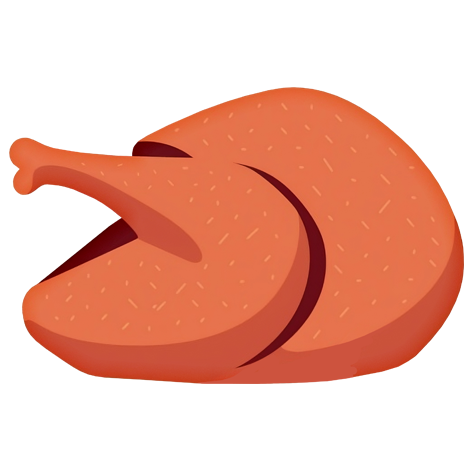
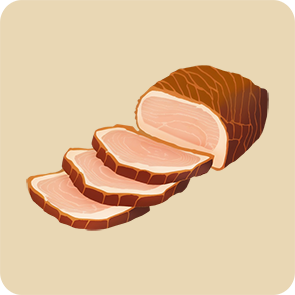
Turkey
A savory and hearty poultry option, turkey is low in fat (especially without skin) and high in protein, making it a popular choice for those looking to build muscle or maintain a healthy diet.
285
1 medium portion
(150 grams)
CAL
A
Nutri-Score
Lean, high in protein, rich in B vitamins and minerals like selenium and zinc.
Value per 100 grams & per cup (150g):
190 kcal | 285 kcal
Protein
27.5 grams | 38.5 grams
Fats
7.5 grams | 10.5 grams
Carbohydrates
None
Fiber
None
Vitamins & Nutrients
- Vitamin B6: Supports brain health and metabolism.
- Niacin (Vitamin B3): Helps convert food into energy.
- Selenium: Supports immune function and thyroid health.
- Zinc: Vital for immune response and wound healing.
- Phosphorus: Helps form bones and teeth.
Satiety and Feelings
Turkey is dense in protein, making it very filling and a great option for curbing hunger. It offers sustained energy without carbohydrate spikes.
What does 100 g look like?
Roughly the size of a deck of cards or about 2/3 cup chopped turkey meat.
What does 2000|2500 calories look like?
About 8–10 cups or 1.4 to 1.75 kilograms (3–3.9 lbs) of turkey meat.
Daily Value per 100 grams %
Did you know?
Domesticated turkeys are descendants of the wild turkey, native to North America.
Benjamin Franklin once proposed the turkey as the national bird of the United States.
Turkey contains tryptophan, an amino acid that helps produce serotonin, sometimes linked (wrongly) to sleepiness.
Most commercial turkeys can’t fly due to their size, but wild turkeys can fly short distances.
Ground turkey is often used as a lean substitute for ground beef.
Drawbacks ⚠️
High in cholesterol, particularly with the skin.
Processed turkey (like deli slices) may contain high sodium and preservatives.
Overcooked turkey can become dry and tough, making it less palatable.