Spareribs

Pork Roast

Pork Rind
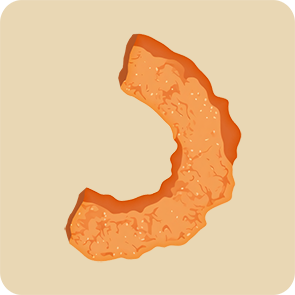
A crunchy, savory snack, pork rinds provide a satisfying texture and are packed with protein and fat, making them a popular low-carb choice for many.
40
1 scratching
(10 grams)
CAL
E
Nutri-Score
High in saturated fat and sodium, low in fiber, and offers protein and some B vitamins.
Value per 100 grams & per cup (50g):
550 kcal | 275 kcal
Protein
60 grams | 30 grams
Fats
30 grams | 15 grams
Carbohydrates
None
Fiber
None
Vitamins & Nutrients
- Niacin (Vitamin B3): Converts food into energy and supports skin.
- Vitamin B12: Aids red blood cells and nerve health.
- Iron: Helps carry oxygen in the blood.
- Zinc: Boosts immunity and healing.
Satiety and Feelings
With its high fat and protein, bacon fills you up fast—though its salty taste can encourage overeating.
What does 100 g look like?
About 3.3 cups of pork rinds (loosely packed).
What does 2000|2500 calories look like?
About 385 grams | 13.6 ounces (around 12 cups loosely packed).
Daily Value per 100 grams %
Vitamin B12
20%
Vitamin B3 (Niacin)
25%
Iron
10%
Zinc
20%
Fiber
0%
Protein
100%
Sodium (Salt)
90%
Carbohydrates
0%
Total Fat
50%
Saturated Fat
40%
Cholesterol
35%
Sugar
Sugar
0%
Calories
25%
Did you know?
- Pork rinds are made by frying or roasting the skin of a pig until it becomes crispy and puffy.
- They are a traditional snack in many cultures, often enjoyed as a crunchy side or snack.
- Despite being high in fat, pork rinds contain no carbohydrates, making them popular for low-carb or ketogenic diets.
- Because pork rinds are highly processed, they can be high in sodium and saturated fats.
Drawbacks ⚠️
- High in saturated fat, which can contribute to heart disease if consumed excessively.
- Very high in sodium, which may raise blood pressure for sensitive individuals.
- Low in fiber and some essential nutrients compared to whole foods.