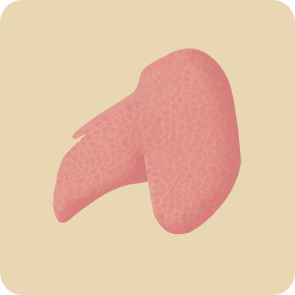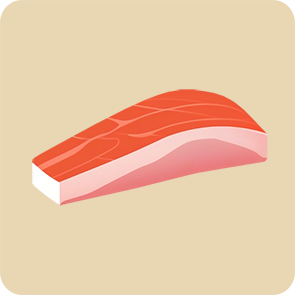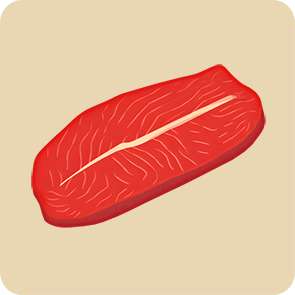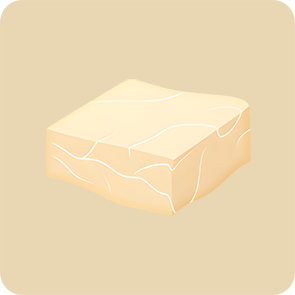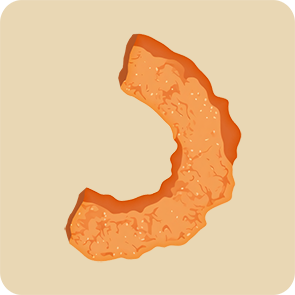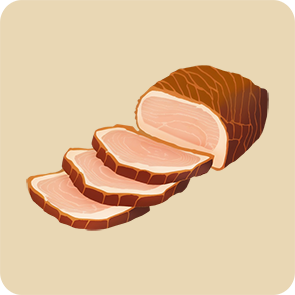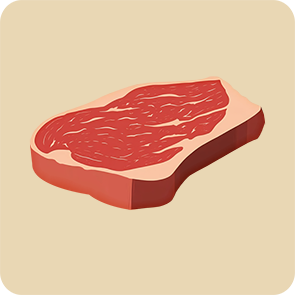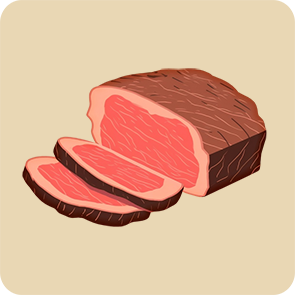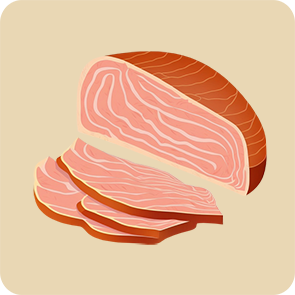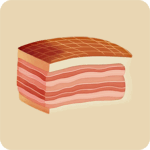
Pork Belly

Spareribs

Pork Chop
A tender and flavorful cut of pork, pork chops provide a hearty source of protein and essential nutrients that support muscle health and metabolism.
345
1 chop
(150 grams)
CAL
A
Nutri-Score
High in protein, rich in B vitamins, and a good source of minerals like zinc and selenium.
Value per 100 grams & per cup (140g):
230 kcal | 325 kcal
Protein
27 grams | 38 grams
Fats
15 grams | 20 grams
Carbohydrates
None
Fiber
None
Vitamins & Nutrients
- Vitamin B6: Supports brain function and energy metabolism.
- Vitamin B12: Essential for red blood cell formation.
- Zinc: Important for immune function and wound healing.
- Selenium: Acts as an antioxidant to protect cells.
Satiety and Feelings
Pork chops are rich in protein and fats, which help promote long-lasting fullness and provide sustained energy. Their savory flavor also makes them satisfying and hearty.
What does 100 g look like?
About two thin slices or one small pork chop (roughly palm-sized, about 3 ounces) or ⅔ cup cooked.
What does 2000|2500 calories look like?
About 13 medium pork chops (2 kg | 4.4 lbs).
Daily Value per 100 grams %
Vitamin B12
35%
Vitamin B6
30%
Selenium
65%
Vitamin B1 (Thiamin)
65%
Fiber
0%
Protein
50%
Sodium (Salt)
5%
Carbohydrates
0%
Total Fat
20%
Saturated Fat
25%
Cholesterol
30%
Sugar
0%
Calories
10%
Did you know?
- Pork is one of the most widely consumed meats worldwide, second only to poultry.
- The pork chop comes from the loin of the pig, which runs from the shoulder to the hip.
- Cooking pork properly is important to avoid foodborne illness, but modern cuts like pork chops can be safely cooked to a juicy medium (145°F / 63°C) and still be tender.
- Pork is a rich source of thiamine (Vitamin B1), essential for carbohydrate metabolism.
Drawbacks ⚠️
Contains saturated fat, which may impact heart health if eaten excessively.
Can be high in sodium if pre-marinated or processed.
Overcooking can make pork chops dry and tough.