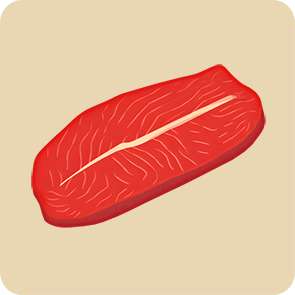
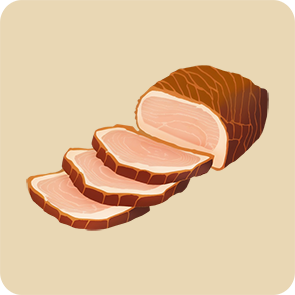
Pastrami

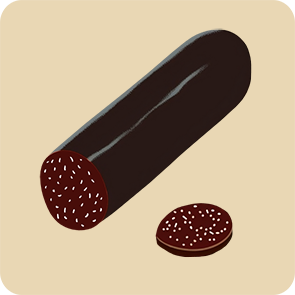
Mortadella Bologna
Pancetta
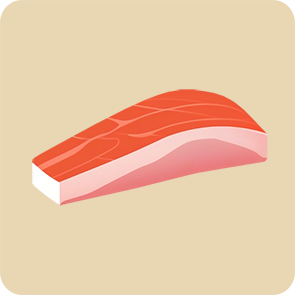
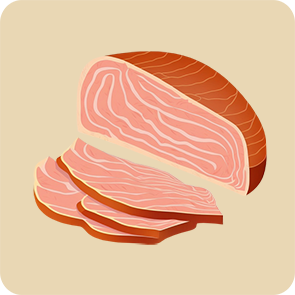
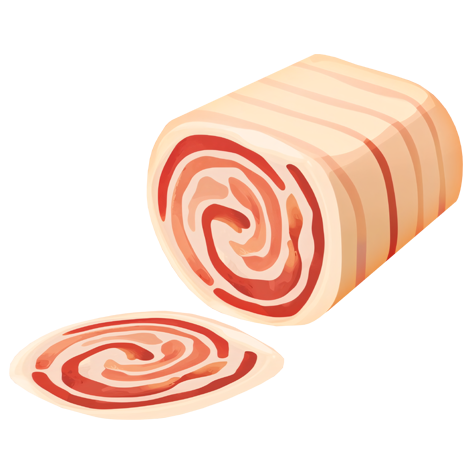
Salty, savory, and deeply aromatic, pancetta is an Italian cured pork belly, similar to bacon but not smoked. It's often used to enhance the flavor of pasta dishes, soups, and risottos.
55
1 medium slice
(20 grams)
CAL
E
Nutri-Score
High in fat and sodium.
Value per 100 grams & per cup (130g):
380 kcal | 495 kcal
Protein
15 grams | 20 grams
Fats
35 grams | 45 grams
Carbohydrates
1 gram | 1.3 grams
Fiber
None
Vitamins & Nutrients
- Vitamin B1 (Thiamin): Supports nerve function and energy metabolism.
- Vitamin B12: Important for red blood cell formation and brain health.
- Zinc: Helps with immune function and wound healing.
- Selenium: An antioxidant that protects cells from damage.
Satiety and Feelings
Thanks to its high fat and protein content, pancetta is very satiating
What does 100 g look like?
About 7–8 thin slices or 1 cup chopped.
What does 2000|2500 calories look like?
About 9.5 cups or 20 slices (2800 grams / 2.8 kg / ~6.2 lbs)
Daily Value per 100 grams %
Vitamin B12
35%
Vitamin B3 (Niacin)
30%
Selenium
35%
Zinc
15%
Fiber
0%
Protein
30%
Sodium (Salt)
70%
Carbohydrates
0%
Total Fat
70%
Saturated Fat
80%
Cholesterol
25%
Sugar
Sugar
0%
Calories
25%
Did you know?
- Pancetta is often confused with bacon, but bacon is smoked, while pancetta is cured with salt and spices and then dried.
- In Italy, pancetta is sometimes eaten raw in thin slices, like prosciutto.
- It adds umami depth to dishes like carbonara and amatriciana.
- Pancetta can be rolled (arrotolata) or flat (tesa), depending on regional styles.
- It’s an essential ingredient in traditional Italian cuisine, dating back centuries.
Drawbacks ⚠️
High in saturated fat, which may raise LDL cholesterol if consumed excessively.
Very salty, which can contribute to high blood pressure.
As a processed meat, regular consumption is linked to a higher risk of certain health issues, including cancer and heart disease.