Cured Ham

Duck

Duck Breast
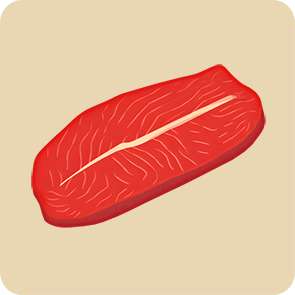
A tender and flavorful cut, raw duck breast offers a rich source of protein and essential nutrients, ideal for delicious and satisfying meals.
500
1 breast, with skin
(250 grams)
(350 kcal without skin)
CAL
A
Nutri-Score
High in protein and iron, rich in healthy fats, with a moderate calorie count.
Value per 100 grams & per cup (140g):
200 kcal | 280 kcal
Protein
25.5 grams | 36 grams
Fats
12 grams | 16.5 grams
Carbohydrates
None
Fiber
None
Vitamins & Nutrients
- Iron: Supports oxygen transport and energy production.
- Zinc: Important for immune health and wound healing.
- Vitamin B12: Essential for nerve function and red blood cell formation.
- Niacin (B3): Helps convert food into energy.
- Vitamin B1 (Thiamine): Aids in carbohydrate metabolism and nerve function.
Satiety and Feelings
Duck breast is leaner than duck leg but still rich in protein and fats, making it a filling choice with a delicate flavor.
What does 100 g look like?
About three-quarters of a medium raw duck breast or roughly ¾ cup diced.
What does 2000|2500 calories look like?
About 13 | 17 raw duck breasts (1.7 | 2.2 kilograms; 3.7 | 4.9 pounds).
Daily Value per 100 grams %
Did you know?
- Duck breast is leaner than duck leg, with a more delicate texture and flavor.
- The skin layer on duck breast is prized for rendering into rich, flavorful fat used in cooking.
- Duck meat contains higher levels of iron and zinc compared to chicken.
- Duck has been a popular ingredient in traditional dishes such as Peking duck and Magret de Canard.
Drawbacks ⚠️
Contains a moderate amount of saturated fat, which should be consumed in moderation.
Raw duck breast, like all poultry, must be cooked thoroughly to avoid risk of bacterial contamination.
The fat content can contribute to a higher calorie density compared to lean meats like chicken breast.