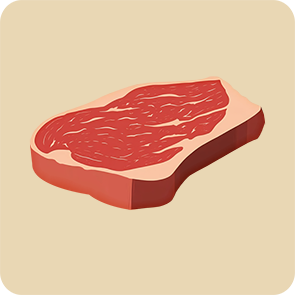
T-bone Steak
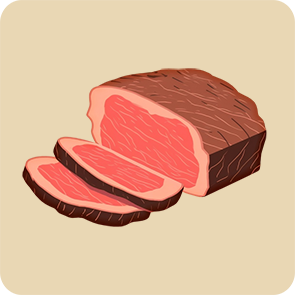
Rib Steak

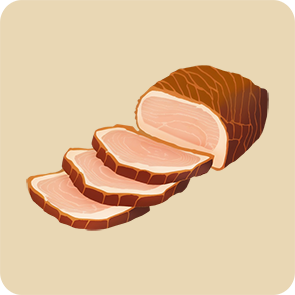
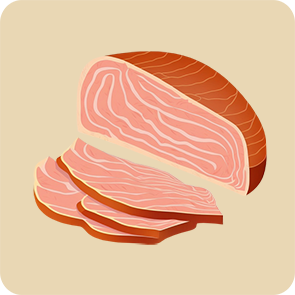
Terrine
A cold meat pâté made from finely ground or chunky meats, often pork, and seasoned with herbs, fat, and sometimes liver or vegetables. Terrine is traditionally baked in a loaf mold and served in slices.
265
1 medium slice
(85 grams)
CAL
C
Nutri-Score
High in protein and flavor, but also rich in fat and sodium.
Value per 100 grams & per cup (150g):
310 kcal | 465 kcal
Protein
16 grams | 25 grams
Fats
27 grams | 40 grams
Carbohydrates
2 grams | 3 grams
Fiber
None
Vitamins & Nutrients
- Vitamin B12: Supports red blood cell production and energy metabolism.
- Iron: Helps carry oxygen throughout the body.
- Zinc: Strengthens immune function and promotes healing.
- Phosphorus: Important for bone health and energy storage.
Satiety and Feelings
Terrine is very satiating due to its high fat content, offering rich flavor in small portions. It’s often served with bread, pickles, or mustard as an appetizer or snack.
What does 100 g look like?
Roughly 1 thick slice or a piece the size of a deck of cards.
What does 2000|2500 calories look like?
About 6–8 slices or 2¾ cups (625 grams | 1.4 pounds).
Daily Value per 100 grams %
Vitamin B12
35%
Selenium
30%
Zinc
20%
Phosphorus
20%
Fiber
0%
Protein
30%
Sodium (Salt)
30%
Carbohydrates
1%
Total Fat
35%
Saturated Fat
50%
Cholesterol
40%
Sugar
1%
Calories
15%
Did you know?
- The word “terrine” refers both to the dish and the earthenware container it’s traditionally cooked in.
- Originating in French cuisine, terrines were once a method of food preservation before refrigeration.
- Terrines can include game meats, liver, vegetables, or even fish, depending on the recipe.
- They’re often served at holiday meals or formal gatherings, due to their elegant presentation.
- High in flavor and fat, terrines pair well with acidic accompaniments like pickled onions or cornichons.
Drawbacks ⚠️
High in saturated fat and sodium, which may not suit heart-healthy diets.
Some versions include organ meats, which can be intense in flavor.
Not ideal for frequent consumption due to calorie density and salt content.