Water Spinach

Star Apple
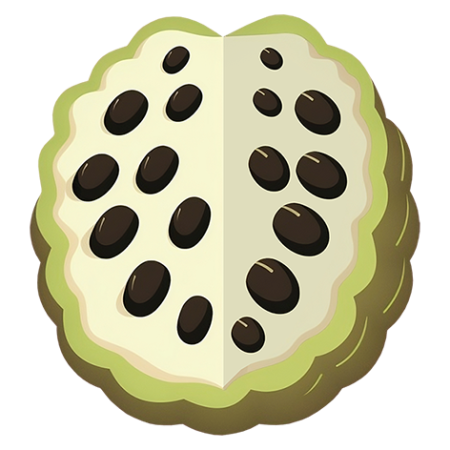
Sugar Apple
Sugar apple is a soft, sweet fruit with a segmented, scaly exterior and creamy, custard-like flesh. It’s commonly eaten fresh or blended into smoothies and desserts.
280
1 medium fruit
(300 grams)
CAL
B
Nutri-Score
Contains vitamins, fiber, and natural sugars, making it a nutrient-rich tropical fruit.
Value per 100 grams & per cup (150g):
95 kcal / 140 kcal
Protein
1.5 grams | 2.5 grams
Fats
0.5 grams | 1 grams
Carbohydrates
25 grams | 35 grams
Fiber
4 grams | 6 grams
Vitamins & Nutrients
- Vitamin C: Supports immune function and skin health.
- Vitamin B6: Supports metabolism and brain function.
- Potassium: Promotes fluid balance and muscle function.
- Magnesium: Supports muscle and nerve function.
Satiety and Feelings
Sugar apple is high in natural sugars and fiber, giving a quick energy boost and moderate fullness.
What does 100 g look like?
About half a medium sugar apple, roughly the size of a small fist.
What does 2000/2500 calories look like?
About 21–27 sugar apples (100 g each) or 14–18 cups diced (150 g each), weighing 2.1–2.7 kg (4.6–6 lbs).
Daily Value per 100 grams %
Did you know?
Sugar apple is native to tropical America and the Caribbean, and has spread worldwide.
Its creamy, sweet, segmented flesh makes it ideal for smoothies and desserts.
The fruit is sometimes called the “sweetsop” because of its naturally sugary flavor.
Drawback ⚠️
Seeds of the sugar apple are toxic and should not be eaten, as they can cause digestive issues or be harmful if consumed in large amounts.
High in sugar – Sugar apples are sweet and can contribute to calorie intake if eaten excessively, potentially affecting blood sugar levels.
Limited availability – Sugar apples are mostly found in tropical regions, making them hard to find in some parts of the world.
- Soft texture makes it perishable, requiring quick consumption or refrigeration.